Over the next two years, DHL Group is investing at least 2 billion Swedish kronor in e-commerce logistics in Sweden. DHL Freight is putting that money into network coverage, capacity, accessibility, and digital interfaces. This article looks at what sits behind the investment – and what it says about the future of road freight.
What does the investment cover?
Sweden ranks among Europe's most mature e-commerce markets – and among those where road freight and last-mile consumer delivery are converging most closely. The expansion at DHL Freight is correspondingly broad: the equivalent of around EUR 180 million goes into coverage, capacity, accessibility, and digital interfaces.
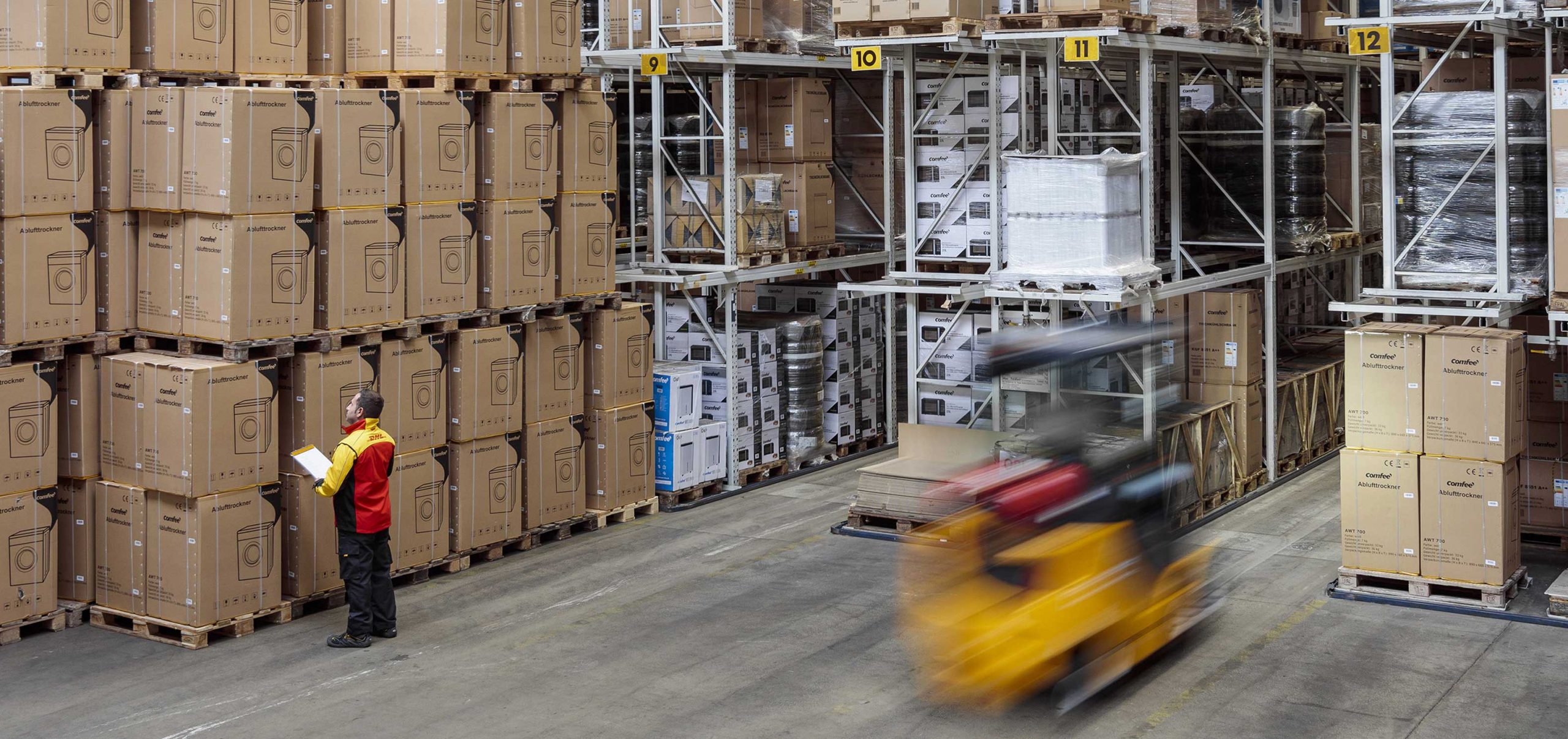
New terminals are being built in the Malmö/Helsingborg, Gothenburg/Borås, Örebro, and Stockholm regions. At the same time, DHL Freight is upgrading existing sites and expanding sorting capacity so that it can handle a multiple of today's shipment volume.
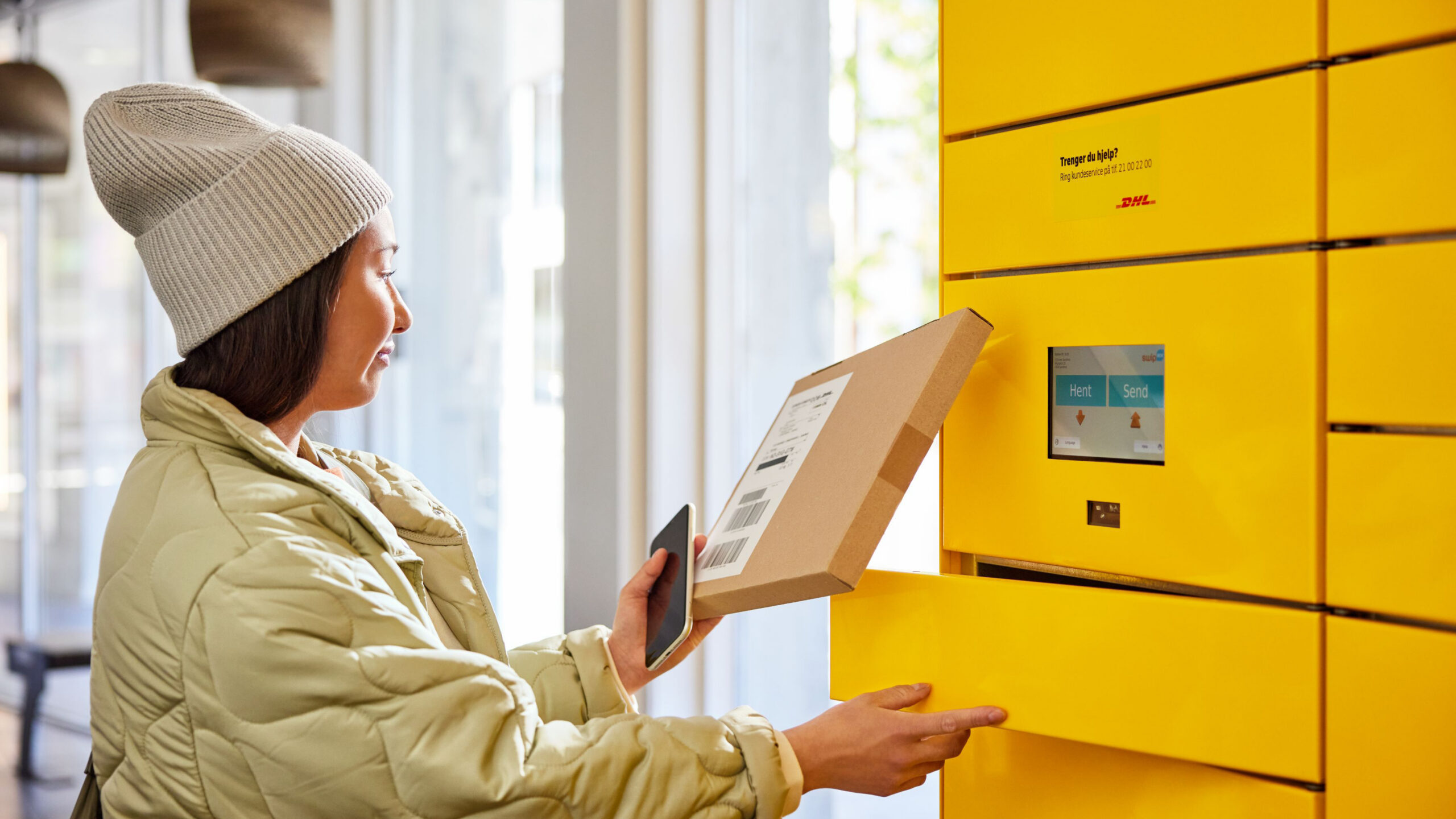
The most visible piece is the network of pickup and drop-off points. The current base of around 550 parcel lockers is set to grow to as many as 5,000, complemented by roughly 2,000 parcel shops.
| Area | Plan |
| Investment volume | at least SEK 2 billion (around EUR 180 million) over two years |
| New terminals | Malmö/Helsingborg, Gothenburg/Borås, Örebro, Stockholm |
| Existing sites | upgrades and automation |
| Sorting capacity | designed for a multiple of today's volume |
| Parcel lockers | expansion from around 550 to up to 5,000 |
| Total out-of-home locations | up to 7,000 (parcel lockers and parcel shops) |
| Timeline | first effects during the course of 2026 |
This marks a decisive shift in our ambition for Sweden. We are scaling up our investment to expand our network at a completely different scale to take a leading position. For e-commerce businesses and consumers alike, success comes down to capacity, proximity and delivery precision. That is where we aim to lead.
– Robert Zander, CEO DHL Freight Sweden
Why is Sweden in focus?
DHL Freight already operates a robust network in Sweden and holds an established position in the e-commerce business. That starting point makes the market an obvious place to grow: this is not a market entry, but scaling on an existing base.
The goal is set accordingly high. DHL Freight aims to position itself as the first choice for e-commerce deliveries in Sweden – through the combination of network size, accessibility, service quality, and operational strength.

Where is the Swedish e-commerce market heading?
Online retail keeps growing, and expectations grow with it. Retailers and consumers want more flexibility, shorter distances, and more reliable deliveries. Those three points are exactly where the expansion is aimed.
The market is heading for more flexibility, more ease of use and closer pickup points from the home.
– Robert Zander, CEO DHL Freight Sweden
Alongside the physical infrastructure, DHL Freight is investing in digital interfaces. The ambition: to be the partner that is easiest to do business with – for online retailers and recipients alike. Our E-Commerce Trends Report gives an overview of current developments in online retail. One of this year's trends: out-of-home solutions.
What does the expansion mean for retailers and shippers?
The investment is deliberately broad in scope. International players stand to benefit, as do large and small Swedish online retailers and marketplaces looking for simple, scalable, and cost-efficient logistics solutions.
For shippers, three effects matter most: more capacity during peak periods, a denser network of pickup points, and a broader presence among the checkout options in online retail.
Our investment enables us to offer the market a stronger and more competitive proposition, combining higher operational capacity with improved accessibility and service.
– Robert Zander, CEO DHL Freight Sweden
How does Sweden fit into the European network strategy?
The Swedish expansion is part of a larger move across the DHL network. Europe-wide, DHL already operates more than 170,000 access points – parcel shops and parcel lockers. Over the next 12 to 18 months, up to 20,000 additional parcel lockers are set to follow, together with partners.
Sweden is therefore not a special case but a particularly visible building block: a market that shows earlier than others how closely road freight and last-mile consumer delivery are growing together.
What changes for employees?
For employees, the expansion means a higher degree of automation, rising volumes, new facilities, and additional delivery options. At the same time, DHL Freight is growing its Swedish team in both operational and commercial roles, because growth calls for additional expertise and resources.
The investment is a strong vote of confidence in our Swedish business.
– Robert Zander, CEO DHL Freight Sweden
When will the expansion become visible?
The first effects will show during the course of 2026. Current planning has the parcel locker rollout starting at the beginning of the fourth quarter, while investments in digitalization are already under way. After the summer, DHL will also appear as a delivery option in more Swedish online shop checkouts.
Closer to consumers: What Sweden reveals about land freight
The Swedish market anticipates a development that concerns other European countries as well: the line between traditional groupage logistics and last-mile consumer delivery is blurring. Keeping pace in e-commerce takes more than terminals and line hauls. It takes a dense network of handover points and digital processes that slot seamlessly into shop systems.
The investment in Sweden is therefore more than a regional expansion project. It shows how DHL Freight is adapting its network to changing consumer habits – with capacity, proximity, and reliability as the three factors that decide between repeat purchase and churn in online retail.
Are you planning international transports to the Nordic markets, or looking to align your logistics with growing e-commerce volumes? Talk to us – we will show you what options our network offers.