The concept of artificial intelligence (AI) emerged in the mid-20th century, and research into AI systems has been ongoing ever since. However, the introduction of ChatGPT in 2022 accelerated development. Everyone is talking about AI. What are its different forms and applications in logistics and beyond?
What does AI stand for?
In the EU Artificial Intelligence Act, the European Commission defines AI as a “machine-based system that is designed to operate with varying levels of autonomy and that may exhibit adaptiveness after deployment, and that, for explicit or implicit objectives, infers, from the input it receives, how to generate outputs such as predictions, content, recommendations, or decisions.“
On the one hand, this is the typical convoluted legalese of the EU. On the other hand, it accurately covers the various aspects that comprise the technical phenomenon of AI. Put more simply, AI refers to the ability of computers and machines to simulate human abilities such as logical thinking, understanding, planning, learning, decision-making, and creativity.
The most significant distinction between AI systems and traditional IT applications is that AI operates autonomously, independent of preprogrammed steps. With conventional software, programmers specify a solution path. They define individual tasks and steps, which are entered into the system according to the principle, “If X occurs, then Y follows”. AI, on the other hand, independently applies learned procedures to new tasks. AI uses algorithms to do so.
AI Basics: The Algorithm
Algorithms exist independently of AI. In conventional programs, an algorithm is a defined sequence of a finite number of steps or instructions for solving a specific problem or performing a task. This can be compared to assembly instructions for a bookshelf in analog life. In the digital world, algorithms are fed data that they process according to specific instructions to generate output data.
AI algorithms, unlike conventional algorithms, are automated to a certain extent. They can create additional algorithms and generate processes for solving specific problems independently of human input. Thus, AI overcomes the limitations of conventional algorithms, which are finite and limited to specific tasks.
What Is the Difference Between AI, Machine Learning, and Deep Learning?
AI, machine learning, and deep learning overlap, but they do not mean the same thing.
- Machine learning is a subfield of AI. It is based on statistical and mathematical methods of pattern recognition. Algorithms are trained using data sets to make statements about statistical probabilities. These statements are based on recognizing patterns in the data. Unlike conventional software, machine learning algorithms do not have a specified and programmed solution path; rather, they find the solution patterns autonomously.
- Deep learning for its part is a subfield of machine learning; it is responsible for the success of AI chatbots, such as ChatGPT. In deep learning, deep neural networks perform computational operations. These networks are modeled on the human brain. Simply put, an artificial neuron is a basic computational operation passed on to another neuron, which performs another operation. In this context, “deep” means that a large number of artificial neurons are interconnected within the network. As with machine learning in general, deep neural networks gain the ability to reliably predict an input through training with data sets. A breakthrough for deep learning occurred when networks could be scaled to any size. They are only limited by physical parameters, such as storage capacity.
Returning to the difference between AI, machine learning, and deep learning, it’s a bit of a quibble: machine learning, with or without neural networks, is not AI itself. Rather, it provides a model on which AI bases its conclusions.

Different Types of AI
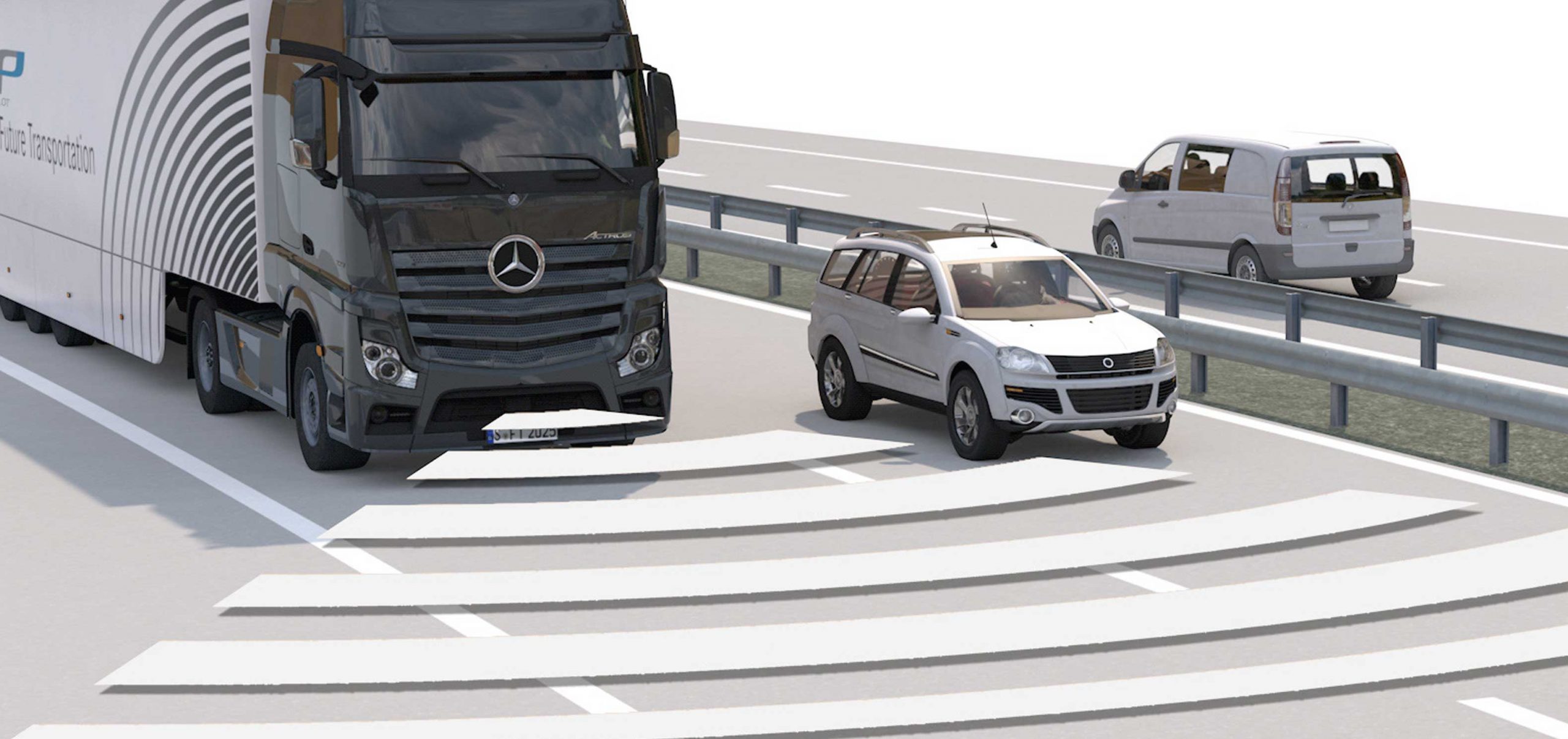
Currently, the best-known applications of AI are chatbots, text generation, image generation (including deepfakes), and autonomous driving. In logistics, for instance, AI can improve load building, route planning, warehouse management, and warehouse robotics. To better understand the potential applications of AI in logistics and other economic sectors, it is helpful to be familiar with various AI concepts.
Weak AI
Weak AI, also known as narrow AI, refers to AI systems that are limited to a specific task or problem. Their conclusions apply only to the task defined by their programming and training data.
Examples of weak AI include image recognition systems, voice assistants like Amazon’s Alexa and Apple’s Siri, social media recommendation algorithms, chatbots for customer service, or autonomous vehicles in warehouses.
These AI systems are highly efficient in their intended applications, but their specific capabilities cannot be transferred to other areas.
Strong AI
The main difference between weak and strong AI is strong AI’s ability to generalize. Also known as artificial general intelligence (AGI), strong AI can interpret facts, acquire new knowledge, and apply it to a wide range of tasks and applications.
It can combine knowledge from different areas, respond flexibly to new situations, and develop autonomously. The goal of strong AI is to reach or exceed the level of human intelligence. As of now, no known AI system has reached this level of complexity. Based on current knowledge, achieving this would require considerable computing power.
Generative AI
In everyday conversation, when people talk about AI, they are usually referring to generative AI. It presently dominates AI use cases. Prominent examples of generative AI based on neural networks include ChatGPT, Microsoft Copilot, and Google Gemini.
Generative AI begins with deep learning. The neural networks involved in text generation are known as large language models (LLMs). LLMs understand human language. However, other learning models are required to generate and interpret images, videos, or music, as these models can process content beyond language.
To develop LLMs and other models, a deep learning algorithm is fed huge amounts of data. The result is a neural network consisting of countless operations, parameters, patterns, and relationships. This training process is computationally intensive and time-consuming. Ultimately, the neural network can independently generate content when receiving requests.
AI models can be optimized for specific tasks. This can be done in different ways, which often require human input. One method is reinforcement learning with human feedback (RLHF), in which real people evaluate the quality of the output to help the model improve.
For instance, employees can review individual results and enter corrections into the AI system. Over time, the generative AI model improves continuously through adjustments made by programmers or feedback from users.
Predictive AI
Like generative AI, predictive AI relies on machine learning and big data. The difference is that generative AI uses LLMs to create new content, whereas predictive AI makes predictions about the future through machine learning.
To create these predictions, AI employs statistical analysis and machine learning to identify patterns and forecast behaviors and future events. Examples include demand forecasting for logistics services and supply chain risk analysis.
Predictive AI technology accelerates and improves the accuracy of statistical data analysis when working with large amounts of data. The more data available to the algorithms, the more accurate the forecasts. These forecasts then serve as a basis for human decisions.
Prescriptive AI
Predictive AI is typically human-centered: it makes predictions based on AI calculations and leaves the decision to humans. Prescriptive AI goes one step further. Building on predictive models, it not only predicts what might happen but also recommends optimal next steps and can even execute them.
Therefore, prescriptive AI is a more capable version of predictive AI. During the automation process, it could eliminate the need for human involvement in certain decisions if the systems are reliable.
Reactive AI
The simplest form of AI is reactive AI. It does not learn from its actions but is programmed and supplied with information so that it can perform certain actions independently. Systems like this have been around for a long time. For example, chess computers from the 20th century do not improve through experience; they make chess moves by calculating options and consequences.
Self Awareness AI
In theory, the ultimate stage of AI evolution is self-awareness. Such AI can perceive its own state of mind, reflect on it, and act accordingly. However, such AI is still purely hypothetical. Whether machines will ever be able to achieve self-awareness is highly controversial. This topic also raises ethical questions: Is self-aware, human-like AI even desirable?
Agentic AI
Agentic AI refers to AI agents that perform tasks autonomously. The typical forms of generative AI provide answers or predictions. AI agents, on the other hand, execute process steps by themselves using external tools. Examples include researching, verifying, entering data, updating statuses, and initiating next actions.
Like regenerative AI, this requires an LLM and other learning models. However, the AI agent needs additional functions and specific tools, such as an API (Application Programming Interface), to enable different applications to communicate with each other. In some cases, several agents work together in a multi-agent system to complete individual subtasks. In such a system, there may also be a higher-level agent that monitors tasks and decisions, as well as supervises simpler agents.
AI agents use collected data from inputs, interfaces, or computer vision to generate insights and decision options, which they then execute. Potential applications of AI agents include autonomous vehicles, trading bots in the stock market, and monitoring patient data in healthcare.
It is important that the agent only pursues goals based on user specifications. This is because AI agents raise the issue of autonomy. What decisions can the AI make independently without reporting back to a human authority for approval? The more autonomous the AI agent, the more important control and security become. For example, when it comes to specific decisions: brake or accelerate? Buy or sell? When should medical professionals be called?

Artificial Intelligence in Logistics
AI has particular promise in logistics, with its extensive networks and complex supply chains. For example, it can be used in the following areas:
- Demand planning: Predictive AI can forecast future demand peaks and corresponding transport volumes. This optimizes resource planning.
- Transparent supply chains: Deep learning can identify complex patterns in supply chains, from inbound logistics to the last mile. The objective of AI-powered supply chain monitoring is to develop a self-learning supply chain capable of anticipating disruptions and implementing improvements based on the principles of prescriptive AI.
- Process optimization: Predictive AI solutions can forecast arrival times and optimize the deployment of human resources. In outbound logistics, AI supports load planning and load building, optimizing space utilization. AI can also improve the choice of mode of transport and route planning.
- Predictive AI for proactive maintenance: Modern warehouses and vehicle fleets are complex systems. Failures in one segment can affect the entire value chain. AI monitoring can reduce this risk. AI analyzes the technical condition of equipment and vehicles, predicting when a component needs replacement before failure occurs.
AI and Human Expertise for Excellent Services
At DHL Freight, we are exploring how AI can improve our services. When suitable applications arise, we test their practical implementation. In the area of automated and intelligent route planning, for example, we use our self-developed tool, RAPTOR, which is an algorithm that accelerates and optimizes decisions concerning delivery schedules and route planning.
Still, AI would be nothing without our dedicated employees. At DHL Freight, human and artificial intelligence go hand in hand. Yet, we believe that logistics must become more intelligent to achieve growth and sustainability. We are happy to advise our customers with our expertise. Please contact us.