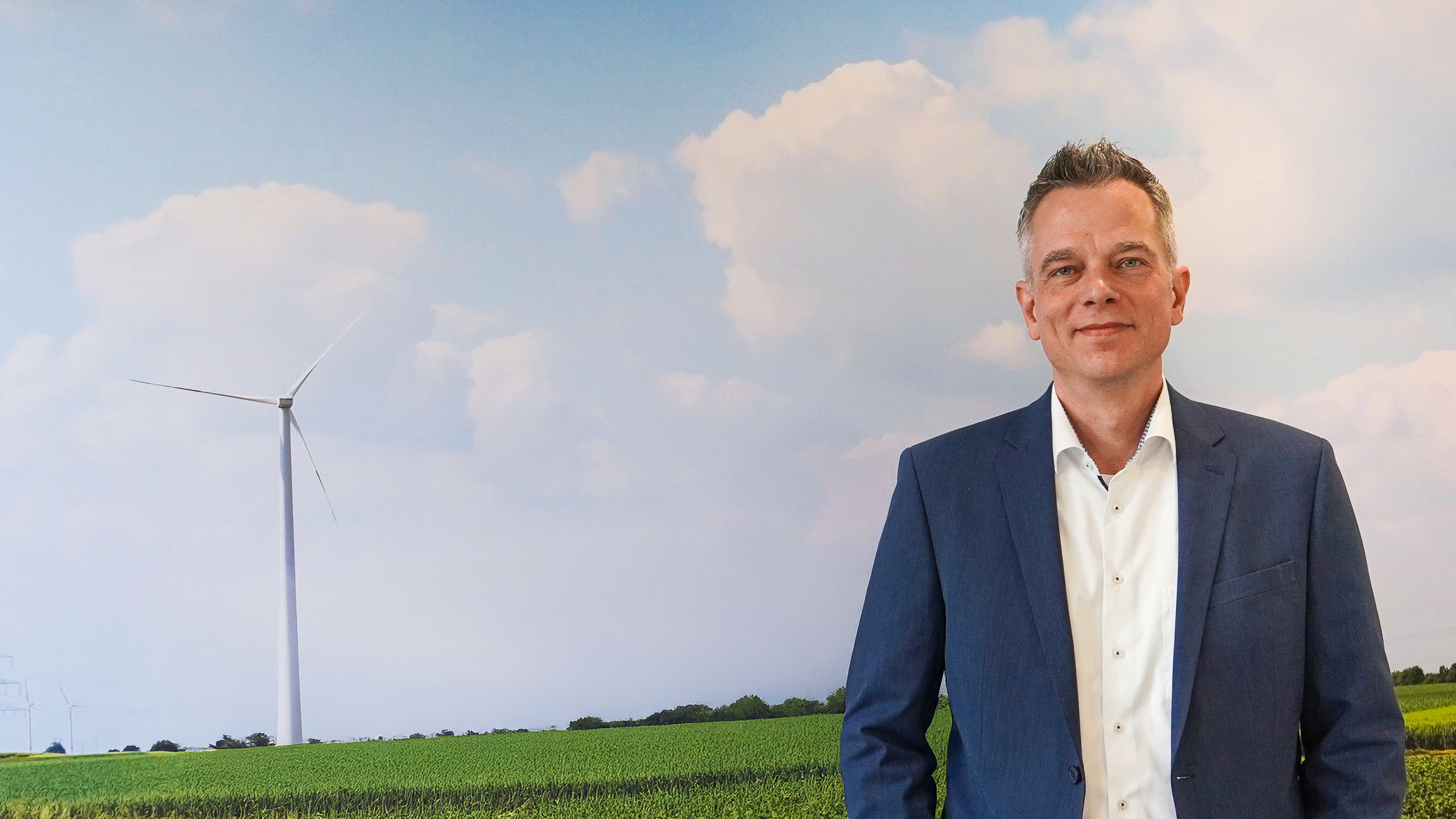
While the growth curve for electric vehicle registrations in Europe sometimes fluctuates, e-mobility is on the rise worldwide. For established vehicle manufacturers and other automotive players, e-mobility is fundamentally changing many processes. This also impacts logistics. In this interview with Freight Connections, Timo Köhler, Global Sector Head EV DHL Freight, explains what these consequences are.
Passion for Electromobility
What impact does electromobility have on logistics, and what challenges does it present to DHL Freight experts? We asked someone who knows: Timo Köhler is the Global Sector Head EV DHL Freight and is responsible for developing logistics strategies for electric vehicles.
Timo Köhler is passionate about e-mobility. “I enjoy working on solutions, especially with my customers. E-mobility is a new and fascinating area to me, with all that it encompasses and the possibilities it opens up.” He also keeps an eye on other solutions and technologies that will help us become more carbon neutral in the future. “That is the stated goal. I want to do my part to advance CO₂ neutrality.”
I want to do my part to advance CO₂ neutrality.
Timo Köhler, Global Sector Head EV DHL Freight
Close to the Customer: the Centers of Excellence for Electric Vehicles
In response to the automotive industry’s new requirements, DHL Freight opened four Centers of Excellence (CoE) for electric vehicles in Germany in June 2025. The centers in Berlin City, Wustermark, Hanover, and Neutraubling are located close to major automobile manufacturers. Proximity is the keyword here. “The CoEs are an opportunity for us to be closer to our customers in the e-mobility field,” explains Timo Köhler, outlining the strategy behind the centers.
“We make sure to be physically close to our customers and keep travel times short. Our team of experts is available to answer questions and also offers local solutions. This, together with our other nationwide branches, gives us a locational advantage.“
DHL Freight has extensive expertise in logistics for electric vehicles. “Through our daily operations, we have acquired this know-how and are pooling it in the CoEs to offer customers the best possible service.“ Due to the success of this concept, additional CoEs for electric vehicles are being planned throughout Europe in collaboration with DHL Customer Solutions and Innovation (CSI).
Control Towers for Predictability and Flexibility
Fluctuating production and demand require flexibility from manufacturers and logistics providers. To ensure both predictability and flexibility, the CoEs employ the control tower concept. This allows for central coordination and visibility of all transportation activities.
Timo Köhler illustrates what this involves: “We have a dedicated team that manages all processes for the customer and serves as central contact. The customer always knows who to turn to. If problems arise, our team offers solutions. For example, they hold back deliveries in the event of fluctuating production. In other cases, they expedite shipments, delivering them on individual pallets from another hub using a faster, smaller vehicle.”
Through our daily operations, we have acquired know-how and are pooling it in the Centers of Excellence to offer customers the best possible service.
Timo Köhler, Global Sector Head EV DHL Freight
Challenges of Logistics for Electric Vehicles
In politically turbulent times, OEMs and suppliers want to strengthen the resilience of their supply chains while also making them more sustainable. However, even in today’s world of electric vehicles, the demand for transportation solutions and the design of transportation services are not fundamentally changing. “Transport is still primarily about getting things from point A to point B,” admits Timo Köhler. Still, logistics for electric vehicles come with special requirements.
20.000 vs. 2.000 Components
Timo Köhler highlights a significant difference between e-mobility and combustion engines: “A car with a combustion engine consists of around 20,000 individual parts, whereas an electric vehicle has only 2,000. This is largely because electric motors are less complex.”
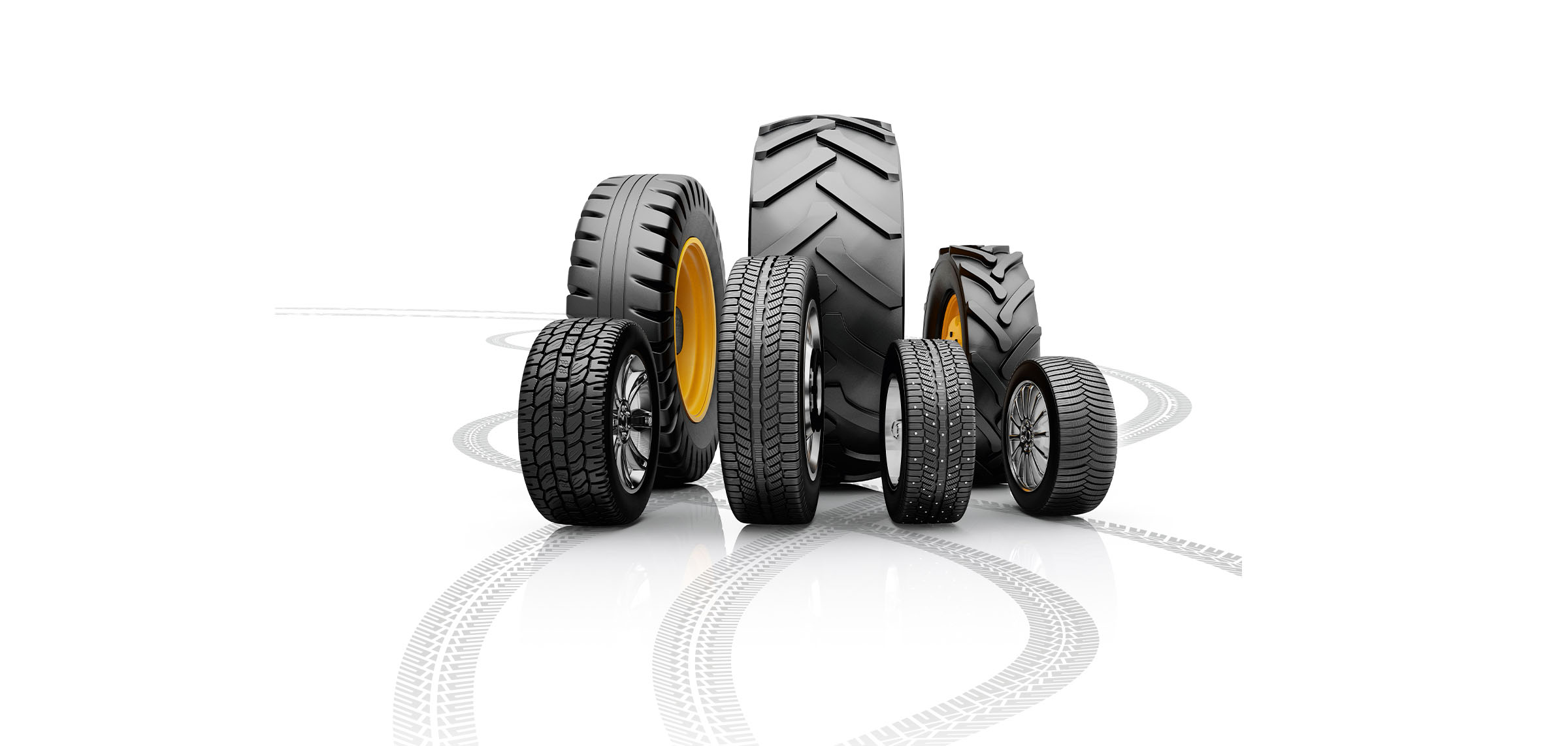
But that does not change fundamental service principles such as just-in-time and just-in-sequence. For high-frequency parts, e.g. special tires for electric vehicles, the just-in-time principle must apply in exactly the same way as in traditional automotive logistics. “Our colleagues in the control tower are trained for this, of course, and are familiar with the requirements,” adds Timo Köhler.
Service Quality for OEMs and Tier 1 Suppliers
Despite the lower number of parts, service quality requirements have not decreased, but rather increased. When manufacturers install fewer parts in cars, the service requirements for each part rise, as the potential costs of failure due to transport or storage damage become more relevant.
According to Timo Köhler, this is especially true for the battery. “The battery accounts for around a third of the total cost of an electric vehicle. This naturally impacts the service quality requirements for battery-specific logistics services, such as when a battery needs to be replaced. In such cases, quality is scrutinized and checked even more closely. It goes without saying that we must guarantee a high level of service quality.”
The Greatest Challenge Has a Name: Lithium-Ion Battery
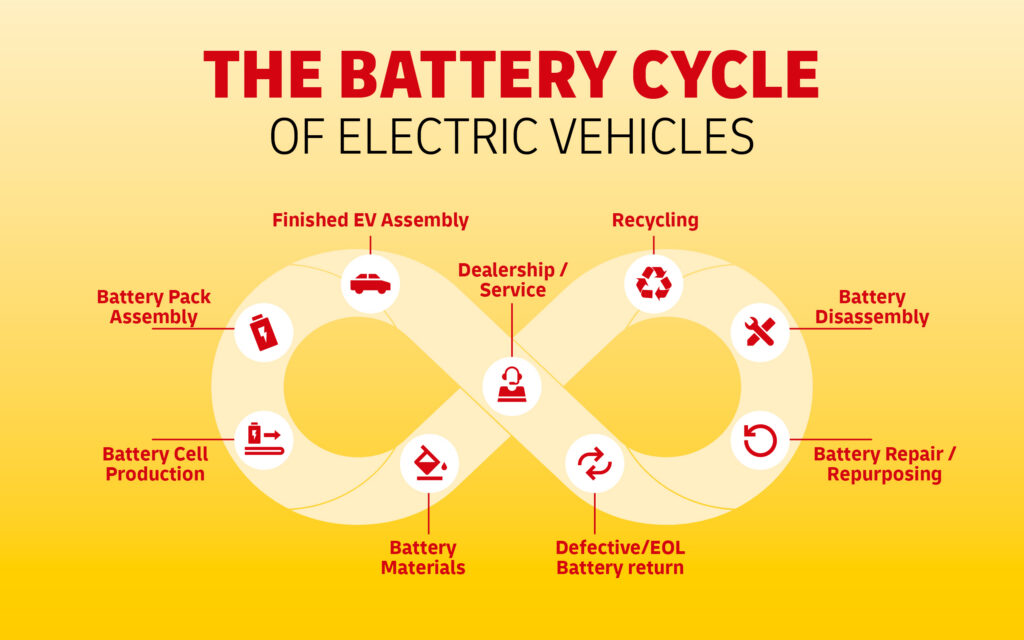
Lithium-ion batteries are not (yet) a common transport commodity. Individual solutions must be developed on a case-by-case basis. First and foremost: “Batteries are considered dangerous goods. Nevertheless, it is the OEM that decides how a battery is packaged. Our solution depends on the nature of this packaging,” says Timo Köhler. “For example, some batteries are shipped in packages wider than 2.40 meters. They cannot be integrated directly into our network because we cannot load them with a lift truck. In such cases, we must offer a dedicated solution that can handle these batteries and consult with customers to optimize their packaging for transport services.”
Another factor is the status of the batteries: are they green, yellow, or red? “Green batteries can be transported without any problems, while damaged yellow batteries cannot. The extent of the damage must be determined to develop alternative transport concepts, if necessary. Red batteries are severely damaged and must be sent for recycling. These require a special solution that is not covered by standard transport within the network.“
What to Consider When Transporting Batteries
Battery transport requires an energetic team trained in handling dangerous goods in accordance with the European Agreement concerning the International Carriage of Dangerous Goods by Road (ADR). Transport planning begins with determining the status. Tim Köhler reveals: “Currently, most of the batteries are green, as new batteries dominate the market. However, this will gradually change, meaning that more broken batteries, known as end-of-life batteries, will need to be transported.”
The status is crucial: green batteries are classified as “normal” dangerous goods, so transport services must be designed accordingly from a technical and regulatory perspective. „We can usually cover green batteries with our comprehensive European network,” confirms Timo Köhler. “If that is not possible, we offer a dedicated solution: we either combine loads or use a single truck to transport several batteries. Of course, prohibitions on combined loads and other relevant regulations must be observed. For special battery transports, we develop safe solutions that meet the customer’s service quality requirements.”
For special battery transports, we develop safe solutions that meet the customer’s service quality requirements.
Timo Köhler, Global Sector Head EV DHL Freight
Car Batteries and Aftermarket: Spare Parts Logistics in the Electric Age
The aftermarket is a sensitive business area, as Timo Köhler emphasizes. “In the aftermarket, the end customers of OEMs are directly affected. Therefore, it is crucial to maintain a high level of service quality to meet the demands of our customers as well as theirs.”
In the aftermarket sector, specifically requested spare parts must be readily available to serve customers quickly. While this goes without saying, it can be challenging given that packaged batteries can exceed two meters in width and be extremely heavy. The conditions at retailer facilities and local workshops are crucial here.
Tim Köhler describes the practical questions that DHL Freight employees still need to ask themselves, even in the age of AI: “Is there a forklift, a pallet truck, or an electric pallet truck? Sometimes, it’s about simple things, such as: How do I get the battery over the curb?” The biggest challenge, also in terms of the aftermarket, remains the battery.
Sustainability in Transport Logistics for Electric Vehicles
In an industry offering sustainable vehicles, sustainable logistics solutions are invaluable. DHL Freight supports its customers in achieving their sustainability goals. One strong signal is the CoE for electric mobility in Berlin, for example. Electric trucks for deliveries, wind power, and photovoltaic panels on the building clearly demonstrate DHL Freight’s commitment to sustainability.
Beyond such flagship projects, DHL Freight designs its transport services for e-mobility providers and all its other customers to be as sustainable as possible. In the pickup and delivery sector, for instance, this is accomplished by using electric vehicles and low-emission fuels in regular service.
DHL Freight is also happy to provide advice on other operational areas. Timo Köhler has a clear vision. “We can support our customers further by showing them how to streamline their processes and reduce CO₂ emissions, thereby lowering overall supply chain emissions. Important aspects here include: How do colleagues work? How are the buildings equipped? Can groundwater be reused?“
We can support our customers further by showing them how to streamline their processes and reduce CO₂ emissions, thereby lowering overall supply chain emissions.
Timo Köhler, Global Sector Head EV DHL Freight
E-mobility and GoGreen Are a Good Fit
DHL Freight’s GoGreenPlus offerings are valuable for automotive customers focused on e-mobility. Timo Köhler is convinced of the benefits of GoGreen. “We are pleased to offer GoGreen so that our customers can actively participate in decarbonizing supply chains through insetting. Of course, cost pressures and sustainability goals can conflict, but GoGreen not only enables us to invest in more sustainable technologies. It is also a direct solution for our customers to achieve their sustainability goals.“
Standardization Is the Future of Logistics for Electric Vehicles
As previously mentioned, the automotive industry is facing cost pressures. Standardization can reduce this pressure. Timo Köhler expects the electric vehicle logistics sector, particularly batteries, to standardize. “Then, it will become part of day-to-day business, offering high-quality solutions and services to customers as standard. Instead of constantly finding dedicated solutions, you can apply standard processes, which is more cost-efficient. This benefits both the customer and us.“
Recycling: A Key Factor in the Success of Battery Electric Vehicles
The issue of recycling is especially important when it comes to batteries. It is crucial for the raw materials obtained through recycling to be returned to the economic cycle quickly and efficiently. Timo Köhler believes this requires collaboration: “In my opinion, it is important in the field of electromobility that all parties work hand in hand to improve processes day by day and make them more cost-efficient.“
It is important in the field of electromobility that all parties work hand in hand to improve processes day by day and make them more cost-efficient.
Timo Köhler, Global Sector Head EV DHL Freight
Cooperation Is the Engine of Progress
Timo Köhler is no stranger to this kind of collaboration in his professional life. “It concerned a new type of battery and its transport packaging. I was invited to contribute to the project at a very early stage and asked to suggest logistics solutions. Involving logistics in a product’s market development right from the outset can be helpful, as it enables you to coordinate the product’s packaging, transport and handling at the beginning of its lifecycle.”
Timo Köhler is pleased to observe the growing focus on e-mobility and related logistics at industry fairs, as well as the increasing acceptance, popularity, and interest in this area. “You can see that there is a development, that more and more people are getting involved, and that people want to achieve something together.”
Timo Köhler appreciates the sense of community and the collective desire to drive things forward. “It connects you with lots of new people and ideas. I always find that inspiring: getting to know new people and new ideas, and then trying to drive them forward together.”
While not every idea will become a viable concept, it is encouraging to see that someone like Timo Köhler at DHL Freight has a vision and is dedicated to making it a reality.