The world’s forests are beyond valuable. They directly support the livelihoods of many people and, due to their crucial role in climate regulation, indirectly benefit us all. With the EUDR, the European Union has adopted a comprehensive set of rules for the protection of forests. But for many companies, the EUDR entails extensive documentation requirements.
What Is the EUDR?
The Deforestation-free Products Regulation (EU Deforestation Regulation – EUDR) aims to promote the consumption of “deforestation-free” products and to reduce the EU’s impact on global deforestation and forest degradation. Specifically, the EUDR is intended to prevent products purchased, used, and consumed by Europeans from contributing to deforestation in the EU and worldwide.
The goal is to preserve forests as carbon reservoirs, maintain biodiversity, and reduce greenhouse gas emissions. The EUDR replaces the EU Timber Regulation (EUTR) and broadens its scope to encompass sustainability considerations. This means that companies operating in the EU are now required to comply with strict regulations ensuring their products are not linked to deforestation.

When Does the EUDR Apply to Which Companies?
The EUDR was adopted on May 31, 2023, and formally took effect on June 29, 2023. Initially, the plan was to start gradually implementing it in December 2024. To give companies sufficient time to set up monitoring systems for their supply chains, increase transparency, and ensure the traceability of their products, the EU first postponed the start of the phased introduction to December 30, 2025. Then, in November 2025, the EUDR was postponed again, giving companies another year. The current dates for the introduction are:
- Starting December 30, 2026, the EUDR will apply to large companies (250+ employees) and medium-sized companies (50-249 employees).
- Starting June 30, 2027, the EUDR will also apply to small companies (10-49 employees) and microenterprises (less than 10 employees).
After these respective dates, companies operating in or trading with the EU must ensure their products meet the sustainability criteria outlined in the regulation.
Objectives of the EUDR
Deforestation is primarily caused by the expansion of agricultural land for pasture and the production of raw materials, such as coffee, cocoa, soy, palm oil, rubber, wood, and their derivative products, including leather, food, tires, and furniture. As a major economy and consumer of these materials, the EU shares responsibility for deforestation and forest degradation and aims to play a leading role in solving these problems.
The EU pursues the following targets with the EUDR:
- Curtail deforestation and forest degradation by ensuring that products traded and consumed in the EU do not contribute to these processes.
- Reduce greenhouse gas emissions by promoting products that are not linked to deforestation, either directly or indirectly.
- Improve the transparency and sustainability of supply chains by ensuring that raw materials are produced legally and sustainably.
- Preserve ecologically valuable primary forests, that is, forests left untouched by humans.
- Protect the human rights of indigenous peoples and local communities directly affected by deforestation.
What Does the EUDR Mean for Companies?
Under the EUDR, any company placing products on the EU market, trading them within the EU, or exporting them from the EU must prove that the products do not originate from recently deforested areas and have not contributed to forest degradation. In other words, the products must be „deforestation-free“.
Thus, comprehensive documentation requirements are necessary for certain raw materials and product groups that may be linked to deforestation. These products can only be sold in the EU if a due diligence statement confirms their compliance with the EUDR requirements.
Companies that introduce products to the EU market for the first time are responsible for
- risk assessment and complying with due diligence obligations
- submission of due diligence statements
- generation and disclosure of the reference number
Downstream operators and retailers who resell products already placed on the EU market are not subject to their own diligence obligations because the first importer has already provided the necessary statements of diligence for these products. Additionally, besides the first importer, only the first downstream operator is required to pass on the original reference number. It is not necessary to collect reference numbers throughout the entire EU supply chain.
What Specifically Is Required for the Due Diligence Statement?
There are essentially three tasks to accomplish:
- First, companies must collect and document information. This includes geocoordinates, as well as documents on the origin of raw materials or products, the production time, and product quantity. The cut-off date of December 31, 2020, is important here. Products must not originate from areas cleared after this date.
- The second step is a risk assessment based on defined criteria. This assessment evaluates whether a product complies with EUDR criteria and the likelihood of deforestation risks. The due diligence statement must document the criteria used to assess the collected information for risks.
- Once risks have been identified, companies must take the appropriate risk mitigating measures to ensure compliance with the regulation. These measures may include implementing additional controls with suppliers or switching to sources that pose a lower risk.
Due diligence statements are submitted via the Deforestation Due Diligence Statement Registry, the central EU information system. National authorities are responsible for implementing and enforcing the EUDR. Noncompliance with EUDR regulations may result in sanctions. These include fines and confiscation of noncompliant goods.
Simplified Procedures for Countries Without Significant Deforestation and Small Businesses
The EUDR’s requirements are very complex for companies. For instance, the EUDR categorizes countries according to their deforestation risk level within a benchmarking system. Depending on a country’s risk level, companies must fulfill corresponding due diligence obligations. A comprehensive risk assessment is required for high-risk areas.
For products from low-risk countries, simplified procedures suffice. In this case, only basic information is collected and submitted. Primary producers from countries without deforestation issues only need to submit a simplified, one-time due diligence declaration specifying only the business address of the production location instead of the geodata of the agricultural operating area. Besides, harvest quantities only need to be estimated.
Micro and small enterprises generally have the option of submitting a one-time simplified declaration. This rule also applies to companies that exceed the small enterprise threshold but only place EUDR-relevant products on the market as part of their business.
EUDR and Logistics: Indirect yet Significant Impact
The EUDR primarily affects operators and traders. Operators are mainly primary producers, importers and exporters. Nevertheless, as the entire supply chain is set to become more transparent and traceable, the regulation also affects logistics services.
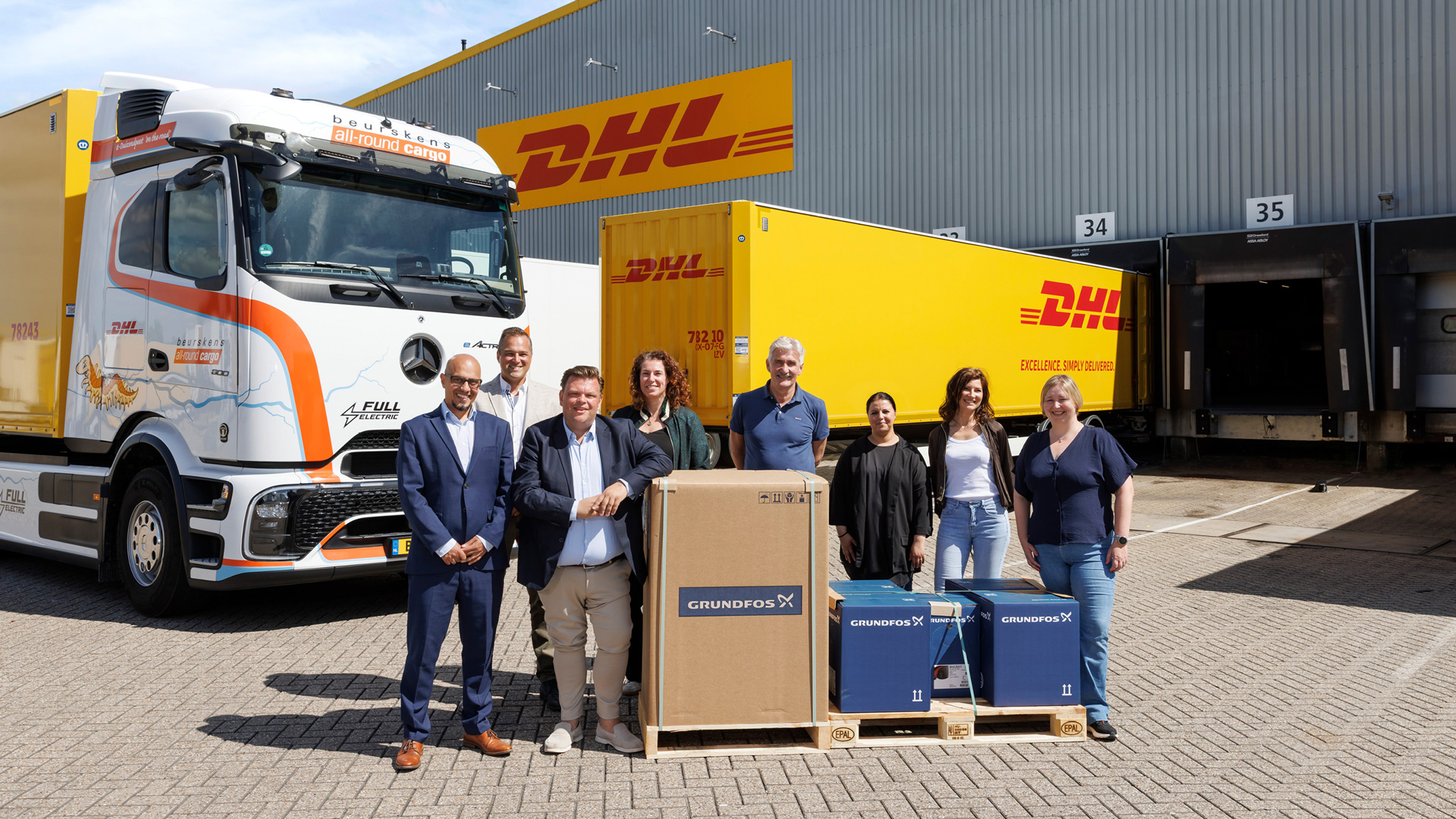
However, it is worth noting that there is one aspect that provides some relief for logistics service providers: standard pallets, e.g. from the European Pallet Association (EPAL), are vital for effective logistics operations. These pallets are made of wood. So it is good news that pallets loaded with goods are exempt from the EUDR. This means that no information on the EUDR compliance of the EPAL pallets being used must be obtained or communicated. Used pallets are also not subject to the EUDR, meaning there will be no changes to pallet exchange or empty pallet management. Consequently, only brand-new pallets are subject to the EUDR provisions.
EUDR – Worthy Goal and Great Challenge
According to the Food and Agriculture Organization of the United Nations (FAO), agricultural expansion is responsible for up to 90 percent of global deforestation. Forests play a vital role in protecting species, maintaining biodiversity, safeguarding the climate, and ensuring a liveable planet. Needless to say, every company has a vested interest in supporting the goals that the EU Commission is pursuing with the EUDR.
At the same time, questions arise: What exactly do I need to verify? What happens if a mistake is made? These are just two of many such questions. The EU Commission has published a guideline and an FAQ to support companies and provide answers to common queries. Nevertheless, the administrative burden on companies remains immense.
As pioneers in green logistics, we at DHL and DHL Freight understand the challenges of making supply chains as sustainable as possible. Compliance can also tie up resources that may be needed elsewhere. Seeking expert advice on EUDR issues can help clarify which goods are covered by the regulation and how they are classified as EUDR-compliant. At DHL Freight, we can help you implement EUDR requirements and answer your questions about cross-border trade. Feel free to contact us.