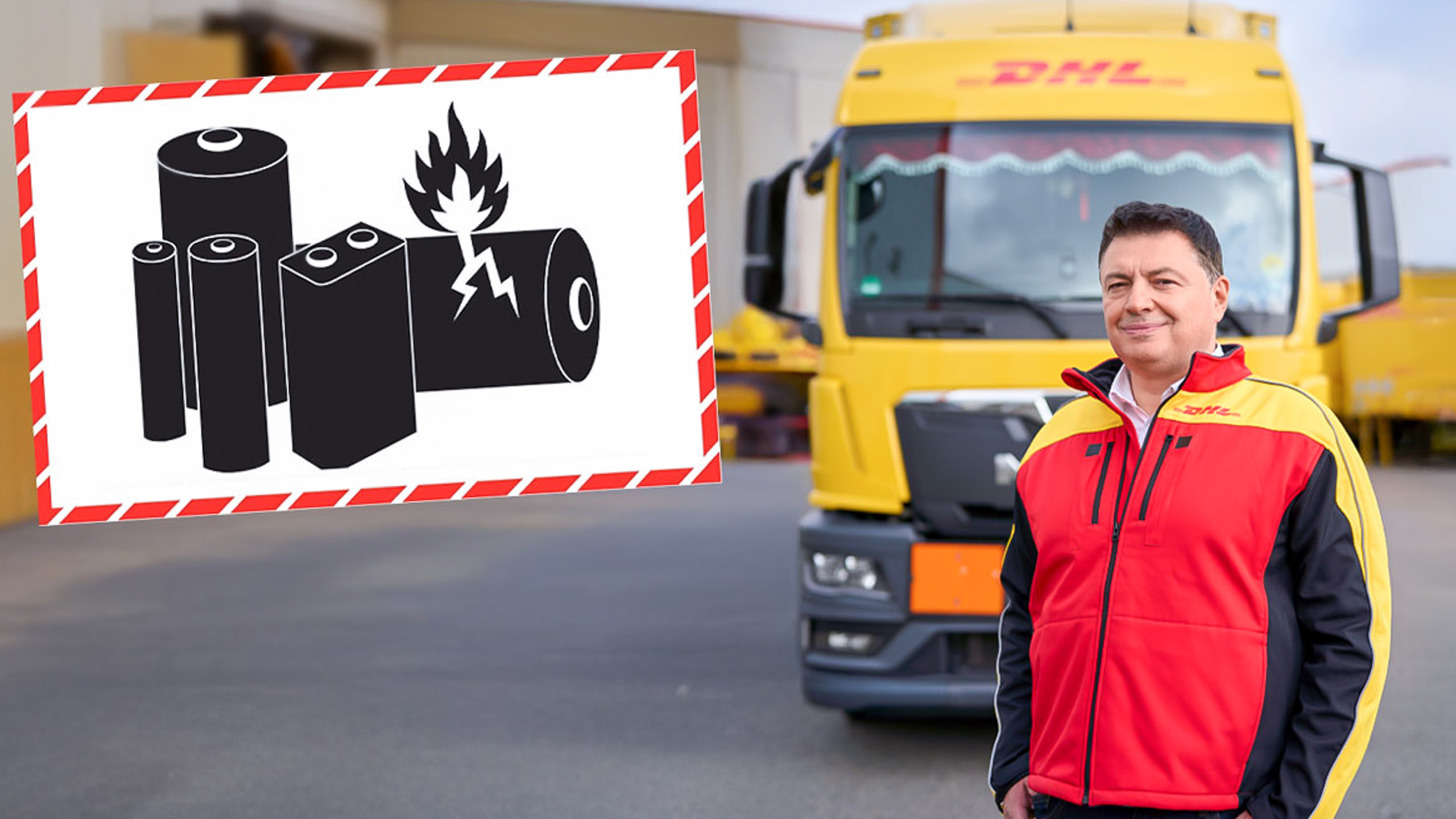
Where high voltage is transported, you need people who keep a cool head and a close eye on every regulation. One of many within the Group who knows all about transporting batteries for electric vehicles is Apostolos Dimoskakis.
Batteries require special handling, and that’s exactly what Apostolos Dimoskakis provides at the Freight terminal in Renningen. As a Forwarding Manager and hazardous materials specialist, he oversees shipments of automotive batteries for a major German car manufacturer. He and his team of six dispatchers regularly organize transports from the manufacturer near Stuttgart to the automaker’s plant in Hungary.
At first glance, it seems like a routine shipment: 28 pallets are registered for transport. Dimoskakis and his team find a service partner, or DHL Hungary takes over the journey. But “when it comes to batteries, special regulations apply. They are classified as hazardous materials, and strict rules govern their transport,” he explains.
These rules are defined in the ADR (Agreement concerning the International Carriage of Dangerous Goods by Road). The ADR assigns hazard points to all goods. If a shipment exceeds 1,000 points, a special ADR vehicle is required – which is the case for batteries.
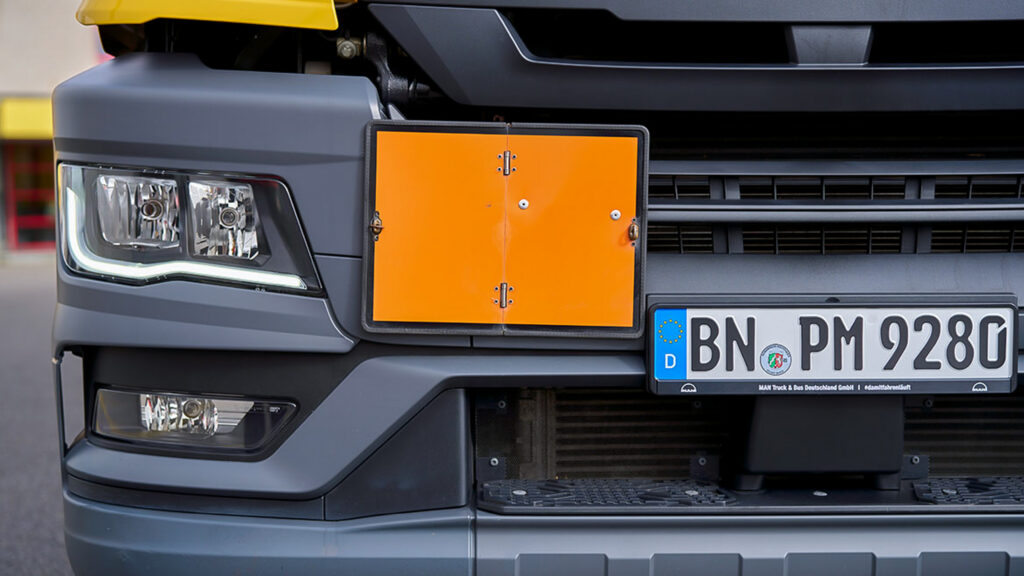
Batteries fall under hazard class 9, making them dangerous goods. The truck must be marked with the typical orange fire-resistant, hazardous materials sign. “For example, this allows highway police to immediately recognize that the vehicle cannot drive through water protection zones and must be inspected more frequently, including its load securing,” says Apostolos.
Safety for hazardous goods
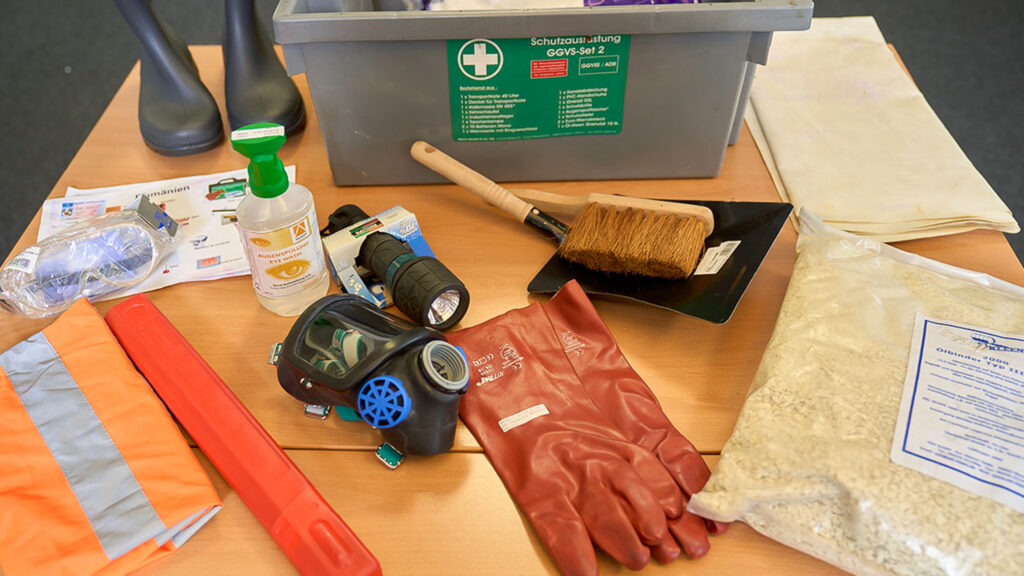
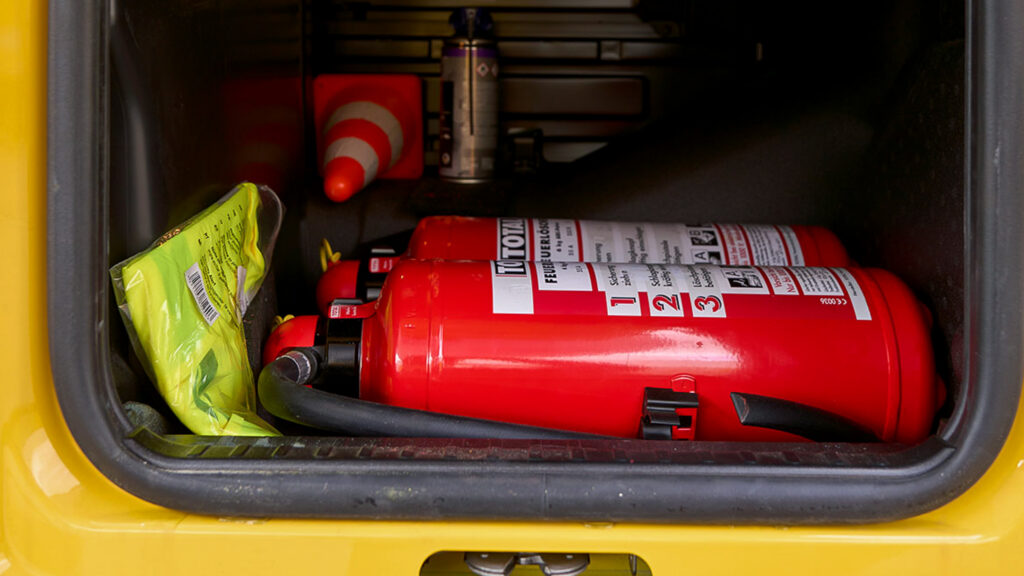
Specifically, this means the truck must carry two fire extinguishers and protective equipment, including boots, mask, gloves, flashlight, shovel, and an eye-wash spray bottle. This is necessary because improper packaging, overheating, or damage can lead to fires or short circuits. Toxic gases or corrosive chemicals may also leak.
The driver must be trained; familiar with hazard classes, ADR documentation, and an expert in vehicle handling, load securing, and emergency procedures. Before each departure, Apostolos and his colleagues check that the driver’s protective gear is complete. “An ADR vehicle with a qualified driver is harder to find and more expensive – about €100 to €150 more per job than a regular truck. But it’s essential to comply with regulations,” explains Dimoskakis.
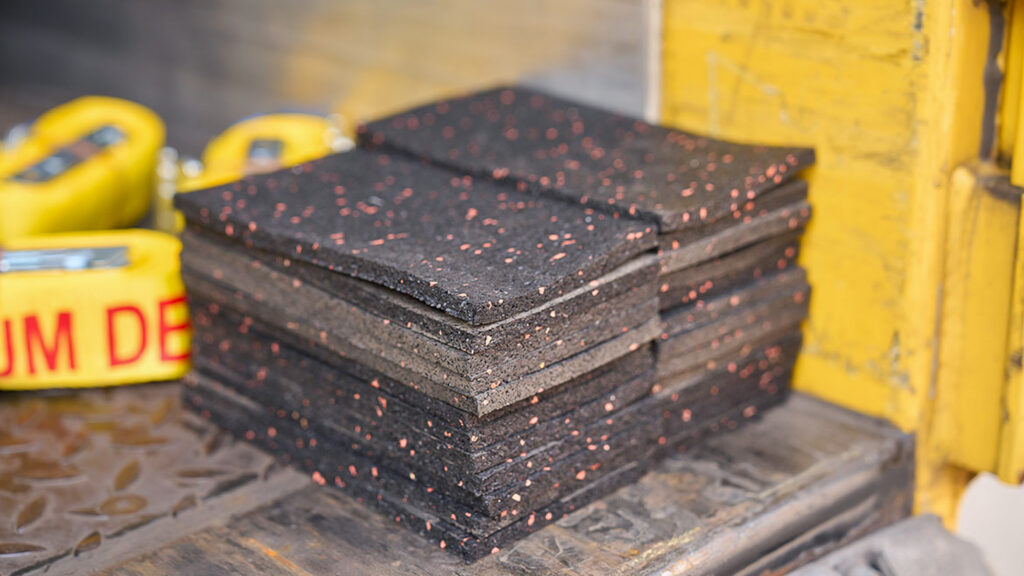
Load securing is also critical “It’s always important, but for hazardous goods, trucks are additionally equipped with anti-slip mats, edge protection, and everything is tightly strapped down,” adds the expert.
All divisions working together
For over three years, the Renningen team has shipped batteries for the car manufacturer two to three times a month – most recently 33 pallets. Battery transport for electric vehicles is so important that many colleagues across the company are involved and collaborate across divisions. DHL Global Forwarding (DGF) transports battery materials needed for manufacturing. DHL Supply Chain (DSC) stores vehicle batteries in warehouses across Europe and works with recycling companies to dispose of old batteries. DHL Customer Solutions & Innovations (CSI) manages major DHL clients, including automotive giants.
The topic of “New Energy”, which includes battery transport and e-mobility, is firmly anchored in the Group’s strategy and represents a major growth market. As more electric vehicles hit the roads, more batteries will be needed. In addition, battery energy storage systems (BESS) are gaining ground, stabilizing power grids. This sector is expected to grow even faster than the market for electric vehicles. Either way: there’s more work for DHL Group.
Collaboration across all divisions is key. This happens in several EV Centers of Excellence, ideally located near major car manufacturers. EV stands for Electric Vehicle. These centers house DHL experts for this vehicle category. There are 15 centers in 13 countries. And here’s the special thing about it: They’re led by different divisions. DHL Freight leads four of them in Germany: Wustermark, Berlin City, Hanover, and Neutraubling.
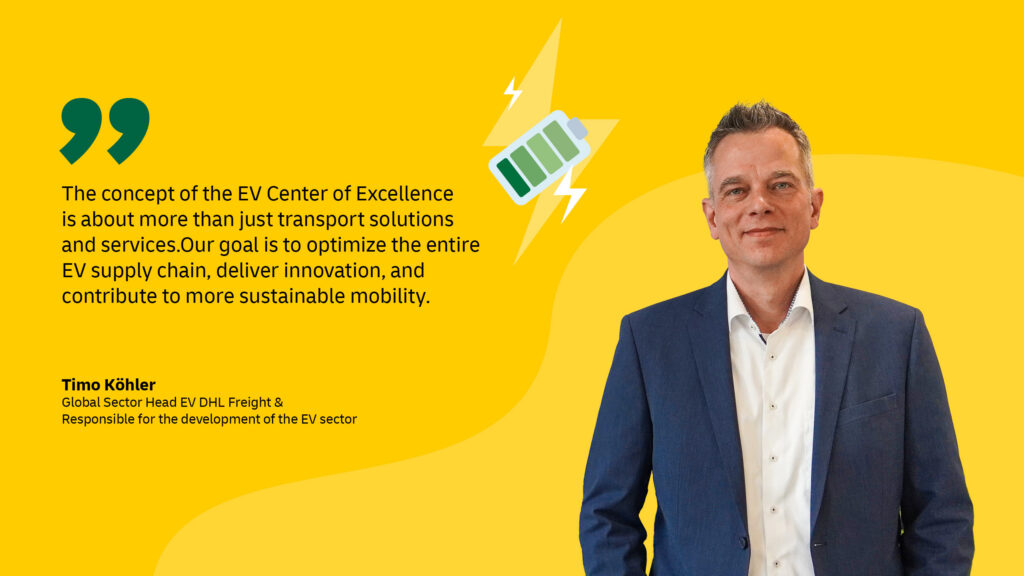
Timo Köhler, responsible for the EV sector development at DHL Freight, explains: “The concept of the EV Center of Excellence is about more than just transport solutions and services,” says Köhler. “Our goal is to optimize the entire EV supply chain, deliver innovation, and contribute to more sustainable mobility.”
From production to recycling
DGF provides ocean transport for raw materials used in the production of batteries at Gigafactories – large sized production sites emerging worldwide. Components like solvents and electrolytes are liquids, transported in isotanks that can be shipped in a temperature-controlled or ambient environment, depending on the grade of material.
Finished EV batteries are also shipped globally in refrigerated or dry containers with or without thermoliners. Most batteries and materials come from China.
DSC operates battery warehouses in several locations in Europe, including Germany, the Netherlands, UK, Slovakia, Spain and Hungary, with at least four more planned in the next 18 months. These facilities must meet strict safety standards, including sprinkler systems and sealable areas in case of fire. Staff must be trained in handling hazardous materials.
DSC also provides circular logistics for batteries that need to be repaired or recycled, partnering with repair companies like Cox Automotive and battery recyclers such as Fortum, which recovers raw materials from damaged or unusable batteries for reuse in new ones.
Rising demand
Fabio Sacchi, responsible for e-mobility at CSI, says: “The EV market is growing at double-digit rates – 25% in Germany alone in 2025. Double-digit growth is also expected for commercial vehicles. This drives demand for vehicle batteries and the logistics solutions we offer.”
So, Apostolos Dimoskakis and his team will likely be sending many more ADR trucks loaded with batteries on the road in the coming years.
Hazard classes
- Class 1 – Explosive substances
- Class 2 – Gases
- Class 3 – Flammable liquids
- Class 4.1 – Flammable solids, self-reactive substances
- Class 4.2 – Substances liable to spontaneous combustion
- Class 4.3 – Substances emitting flammable gases when in contact with water
- Class 5.1 – Oxidizing substances
- Class 5.2 – Organic peroxides
- Class 6.1 – Toxic substances
- Class 6.2 – Infectious substances
- Class 7 – Radioactive substances
- Class 8 – Corrosive substances
- Class 9 – Miscellaneous dangerous substances and articles
UN number
The orange signs often display numbers - these are UN numbers: four-digit codes identifying hazardous goods. Lithium-ion batteries not installed in devices carry the number 3480.
EV Centers of Excellence
These centers offer tailored solutions for the entire supply chain of electric vehicles (EV) and lithium batteries, including:
1. Transport
All EV parts and lithium-ion batteries.
2. Finished vehicles
Specialized services for prototype parts.
3. Aftermarket
Supplying dealers with EV spare parts and planning battery transports.
4. Battery handling
Managing hazardous goods transport for undamaged batteries.