5G, the latest mobile communications standard, is significantly faster than its predecessor. However, speed is just one of its many features. Its enormous connection capacity is even more crucial for logistics: 5G increases the potential for Internet of Things (IoT) applications, automation, and smart warehouse and transport management. 5G makes logistics more efficient and customer-friendly.
What Is the Difference Between 4G and 5G?
Mobile networks date back to the 1970s. Just think of movies from that era in which drivers of expensive cars would pick up large handsets to make calls while on the road. The first generation (1G) of these networks was used until the 1980s. They were analog, had low capacity, and could only be used for voice calls.
The first digital standard, 2G, emerged in the 1990s and enabled data transmission. In the 2000s, 3G introduced mobile broadband services, ushering in the multimedia age on cell phones. The LTE (Long Term Evolution) standard finally arrived with 4G in the 2010s. This mobile communications standard enables high data rates with low time delay (latency). Since 2019, there has been a gradual transition to 5G networks.
The key features of 5G compared to 4G are:
| 4G | 5G | |
| Transmission speed | 100 Mbps download speed 50 Mbps upload speed | 10,000 Mbps download speed 100 Mbps upload speed |
| Latency | 30-100 milliseconds | 1 millisecond |
| Capacity | 2,000 users per cell tower | 1,000,000 users per cell tower |
What Features Does the 5G Standard Offer?
- Due to eMBB (enhanced Mobile Broadband), 5G is much faster than 4G. It can achieve speeds comparable to those of a DSL or VDSL broadband connection via copper or fiber-optic cable, and even exceed them.
- Additionally, latency is significantly lower. In mobile communications, latency refers to the delay time required for data to be transmitted from the end device to the server and back. URLLC (Ultra Reliable Low Latency Communication) enables 5G response times of 1 millisecond. This allows for real-time communication, which is important for applications such as autonomous driving.
- The biggest quantitative leap concerns capacity and connectivity: 5G can handle one million devices per cell tower via mMTC (massive Machine-Type Communication). This facilitates the full potential of applications such as IoT with numerous sensors.
- Another important factor is the higher security standard. 5G uses advanced encryption technologies and supports end-to-end encryption. It offers several options for secure authentication. One example is SIM-based authentication, which uses a SIM card’s unique identity for network access or device authentication.
- One major 5G technology is network slicing. This involves dividing a physical network into separate virtual subnetworks (slices). Each subnetwork can be individually configured to meet specific needs. This allows applications such as autonomous driving and IoT to be used without interfering with each other.
- Finally, companies can set up private networks more easily with 5G because the infrastructure is partly based on cloud servers and software. Companies typically create their own 5G networks using standard 5G software. Still, thanks to network slicing, they can create isolated areas that improve security and reliability.
5G Technology in Logistics: What Are the Greatest Benefits?
5G mobile communication offers private users an outstanding technical experience thanks to its higher speed and lower latency. However, many people may not even notice the difference on their smartphones. 4G is adequate for most personal uses. The added value of 5G is most evident in economic applications, including logistics.
In logistics, transmission speeds are not the decisive factor, but rather connectivity and capacity. Modern freight management requires continuous monitoring, which necessitates networked cameras and sensors that detect temperature, humidity, or vibrations. This requires numerous transmitters to exchange large amounts of data. 5G prioritizes such IoT applications and provides logistics service providers with the necessary transmission capacity to handle this flood of data.
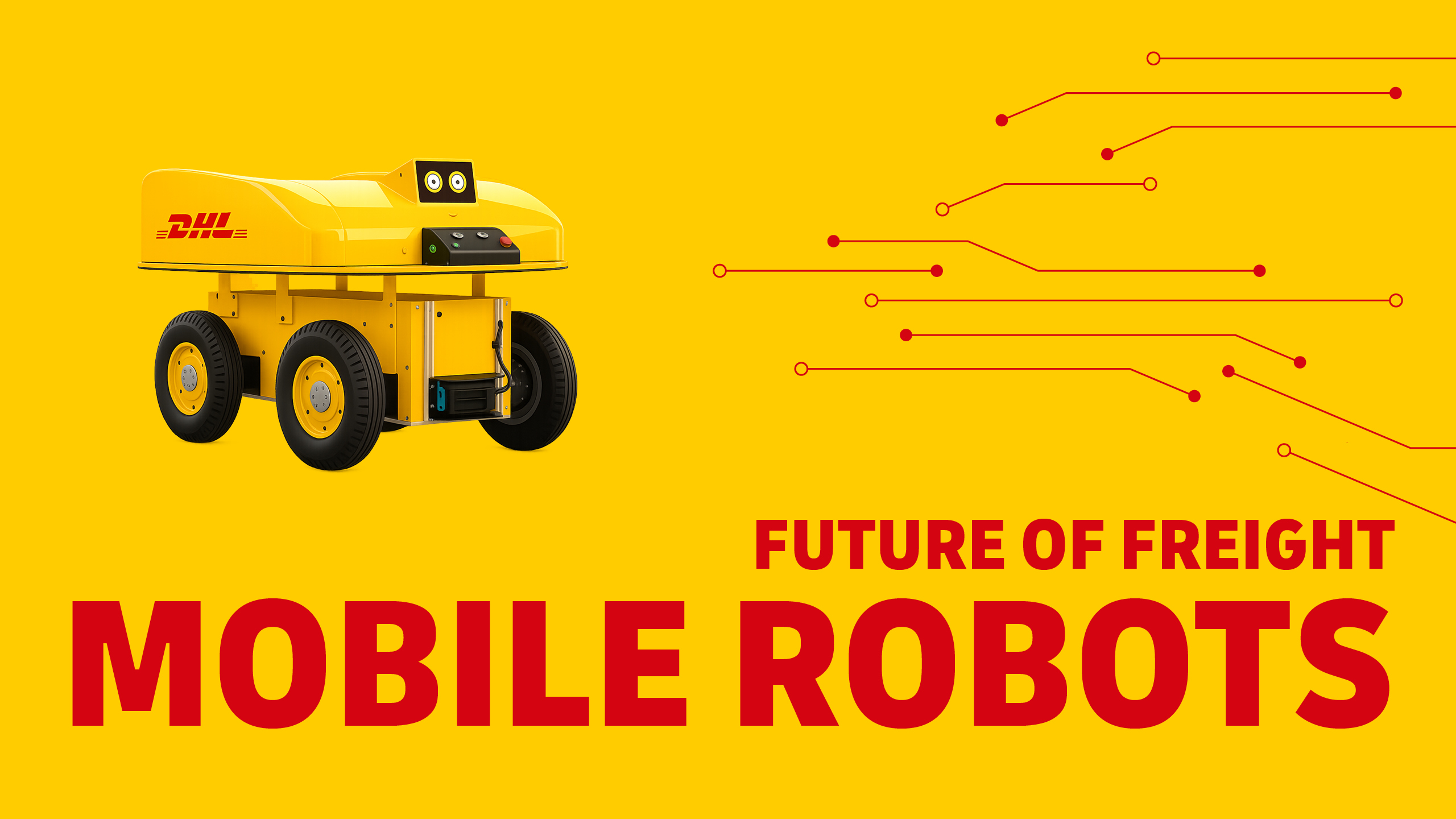
Future of Freight: Mobile Robots in Logistics
An increasing number of people own mobile robots for household tasks, such as vacuum cleaners and lawn mowers. Even these ...

What Are the Applications of 5G in Logistics?
- Transport management: 5G allows for the networking of countless smart labels, tags, and sensors. This 5G network of IoT sensors transmits information on the precise tracking and location of each shipment and vehicle, as well as environmental conditions. This creates transparency across all processes, permitting precise and efficient planning.
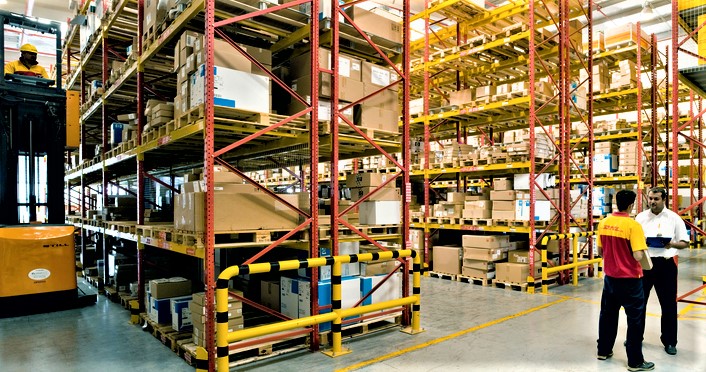
- Warehouse and inventory management: Processes in the warehouse also benefit from live 5G data. Smart shelves, for instance, can automatically update stock levels. Because the location of each item in the warehouse is precisely documented, order picking is accelerated. Employees are guided to the right destination by sensor data combined with augmented reality applications.
- Autonomous vehicles and robots: Low latency and superior reliability are quantum leaps for autonomous systems, such as autonomous guided vehicles (AGVs), autonomous mobile robots (AMRs), and drones. These systems can respond to relevant data in real time (and change course, for example). At the same time, higher-level servers and operating personnel receive continuous information from the vehicles. Consequently, the safety of these systems increases, as do their possible applications.
5G Logistics Tracking and More: How Can 5G Improve Customer Service?
5G is more than just a new mobile communications standard. It is a catalyst for the logistics of the future and greater customer friendliness. 5G opens up more opportunities for automation. It reduces the error rate, increases efficiency, and lowers costs. Real-time tracking supported by 5G creates transparency for customers and improves service and delivery quality.
DHL Freight is committed to staying at the cutting edge of technology. As soon as new technologies emerge that can improve our services, we implement them into our processes. This ensures that your shipments will continue to reach their destinations quickly, safely, and sustainably.
FAQs on the Potential of 5G in Logistics
What are the features of 5G?
Speeds of up to 10,000 Mbit/s make 5G a very fast mobile communications standard with extremely low latency. It enables high security standards and offers high capacity. Many devices can use the same cell tower without affecting the network’s performance.
What is the main advantage of 5G over 4G?
Not only is 5G much faster than 4G, it also has significantly lower latency of one millisecond. Its main advantage, however, lies in its enormous capacity and connectivity. This enables the full potential of IoT, allowing a large number of devices and sensors to communicate with each other simultaneously.
Which aspect of 5G technology is the most important for logistics?
The security of 5G connections is vital for all sectors of the economy. For logistics, 5G’s connection capacity is likely to be a real game changer. In a stable, secure network, countless vehicles, shipments, shelving systems, and warehouse robots can communicate with each other, significantly improving logistics processes.
What are the applications of 5G technology in logistics?
Significant use cases include transport management, warehouse and inventory management, as well as autonomous vehicles and robots. 5G provides transparency across all processes, enabling precise management of deliveries and inventory. The low latency of 5G improves the performance of autonomous vehicles and robots, increasing their safety and advancing automation.
How does 5G support the supply chain?
5G enables real-time tracking, making the supply chain much more transparent. All parties involved have access to relevant information about vehicles, shipments, and the current situation. Any deviations are communicated in real time, which allows for immediate countermeasures and prevents delivery failures. This improves service quality and makes the supply chain more resilient.