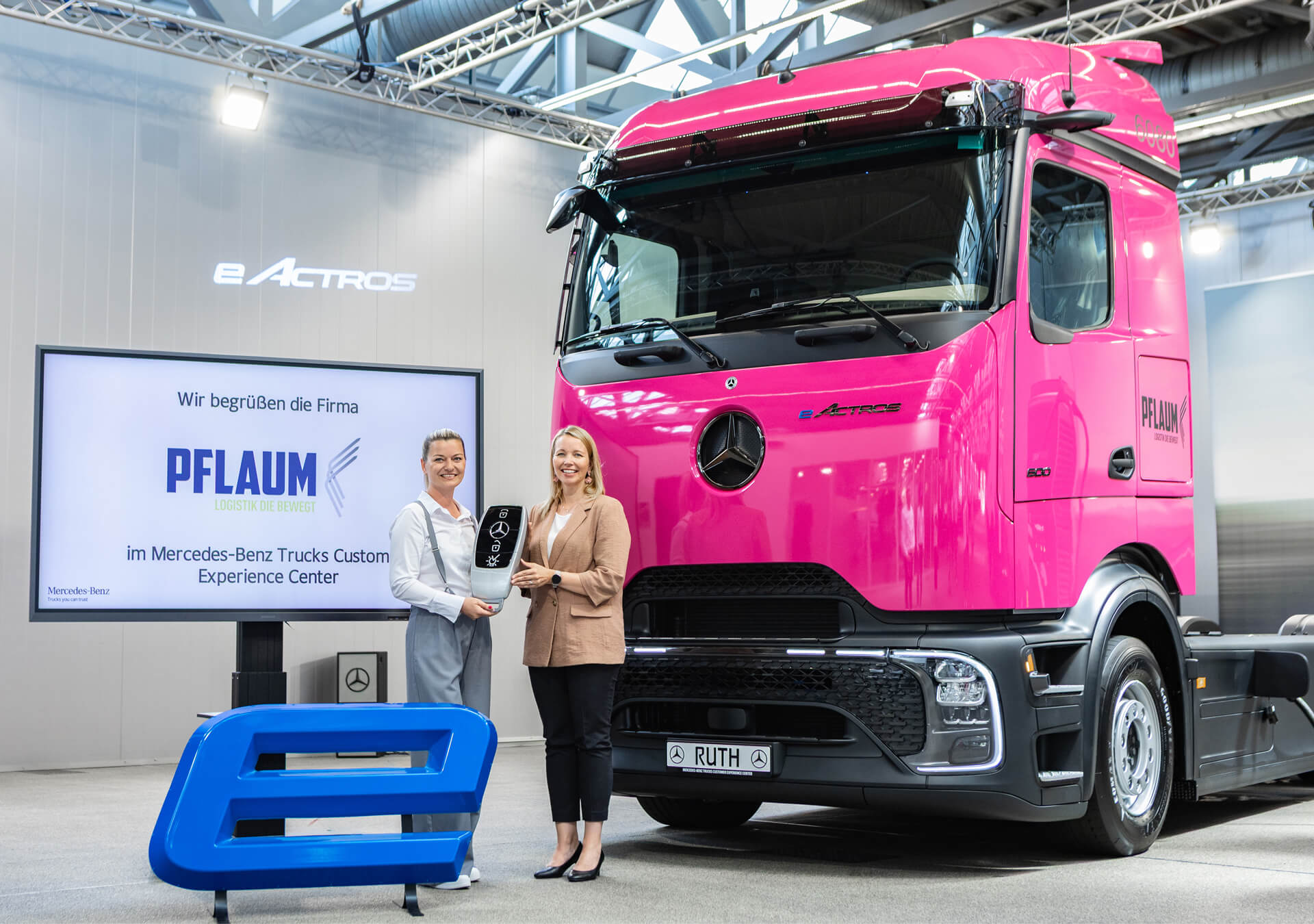
DHL is driving the electrification of road freight beyond its own fleet, extending it to its network of contracted carriers. Through the Partner Store, subcontractors now have access to battery-electric trucks from JUNA. The Pflaum Logistics Group in Bavaria is leading the way with a five-year contract for 20 electric trucks.
Why is DHL including its transport partners in the transition to electric vehicles?
A significant share of the road freight handled by DHL is transported by trucks operated by transport partners. This means that reducing emissions across the network also requires taking partner vehicles into account. However, the switch to electric trucks presents a major financial hurdle for many small and medium-sized transport companies.
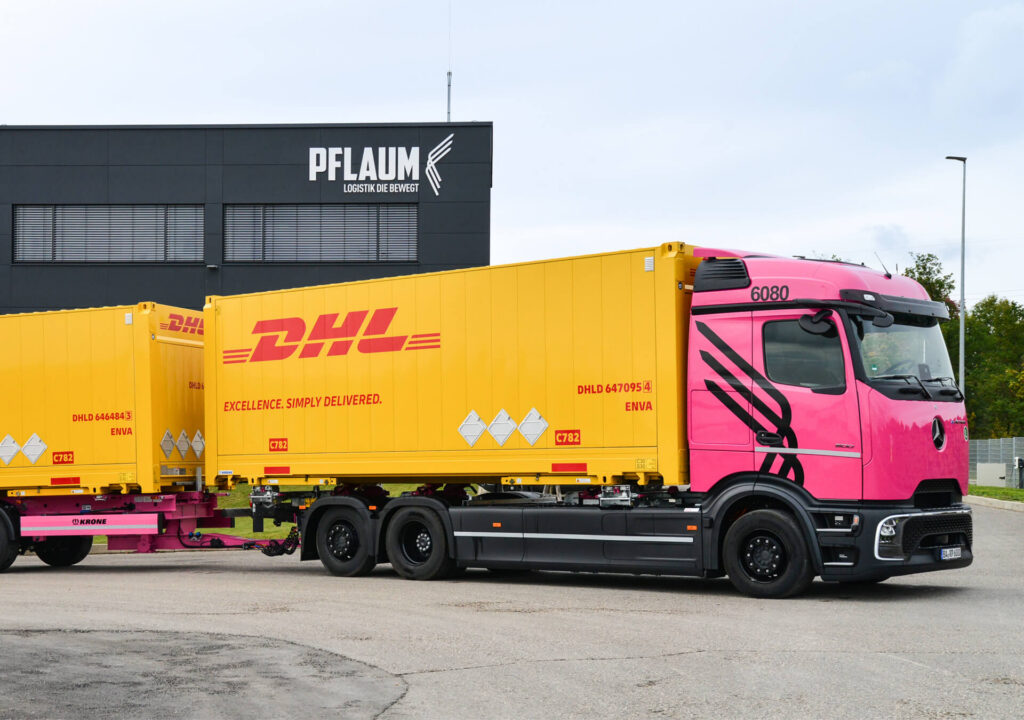
DHL Group aims to reduce its logistics-related greenhouse gas emissions to net zero by 2050. To this end, DHL is not only converting its own fleet but is also supporting partner companies in their transition to low-emission propulsion systems.
To reach this goal, we are continuously decarbonizing our own fleet. In addition, we work closely with our extensive network of logistics partners, supporting them in transitioning their fleets to low-emission vehicles.
Stefan Kasprowiak
VP Transport Procurement at DHL Freight
What is the Partner Store?
The Partner Store is the DHL Group’s procurement platform for subcontracted carriers. It consolidates pre-negotiated terms for alternative drive systems, fuels, and charging infrastructure.
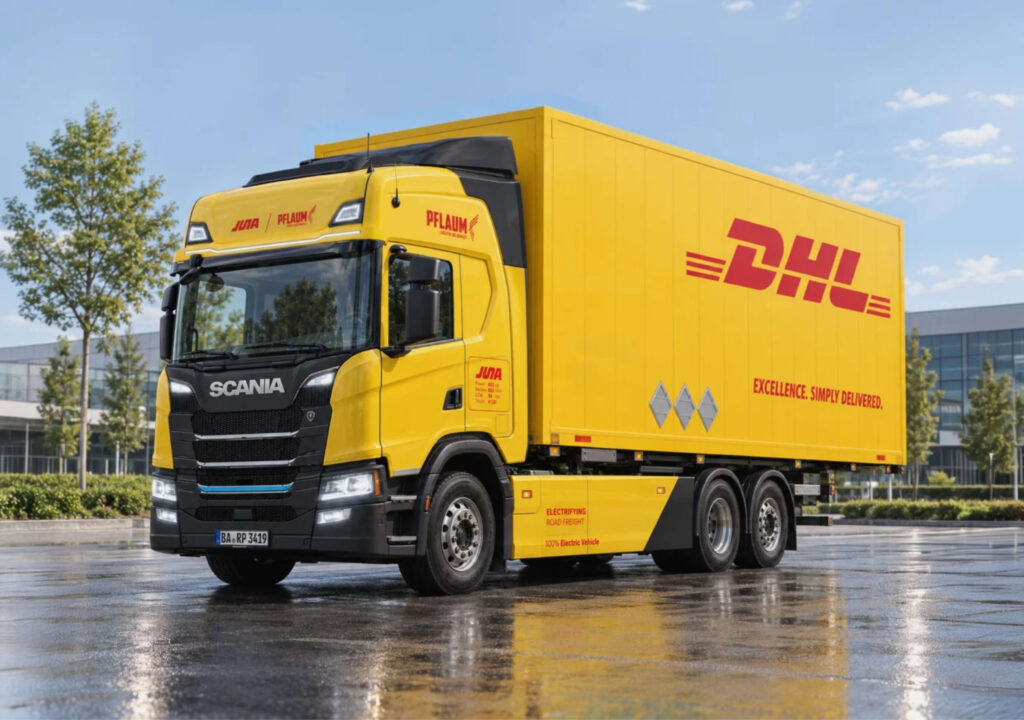
JUNA is a new provider that has joined the platform. JUNA does not sell electric trucks, but rather provides them as a service. JUNA claims to operate one of the largest electric truck fleets in Europe.
How does the JUNA model work?
JUNA works with major clients, such as DHL. Through these partnerships, JUNA is helping to electrify transportation companies that operate on their behalf. The offering consists of three components:
- Route and cost-utility analysis: JUNA conducts preliminary assessments to determine on which routes and under what operating conditions electric trucks can be operated profitably.
- Technical expertise: JUNA brings its experience in operating battery-electric trucks to the partnership.
- As-a-service model: Instead of buying or financing trucks, the transport company uses vehicles under a usage-based fee arrangement agreed upon in a contract.
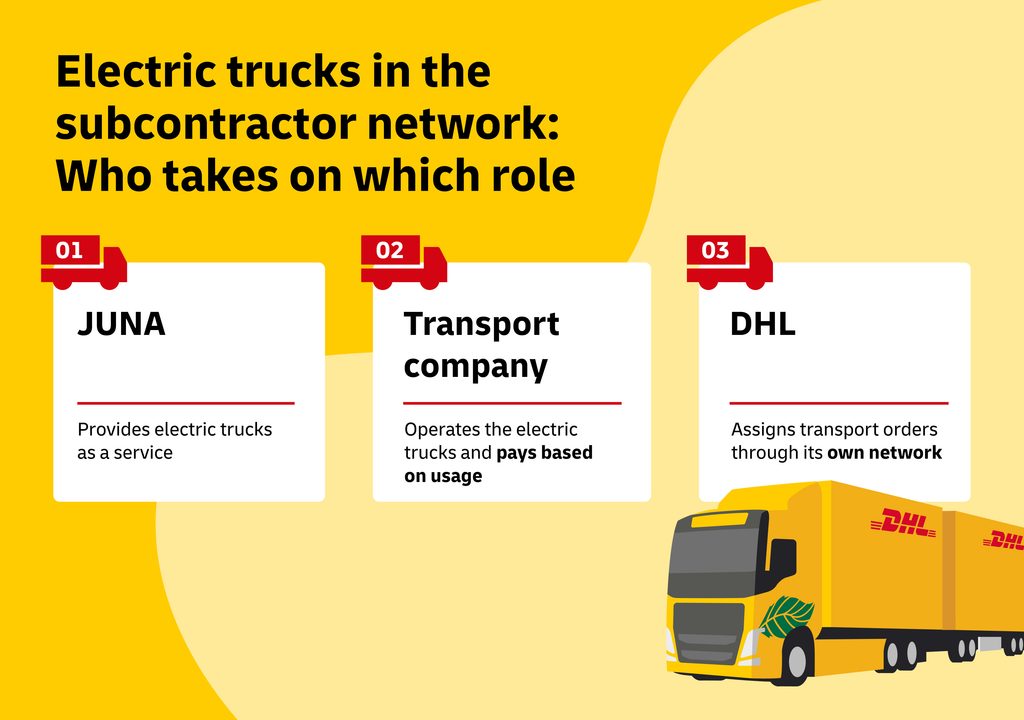
According to JUNA, the model offers total cost of ownership on par with a diesel truck under suitable operating conditions. The breakdown for the parties involved is as follows:
| Participant | Role | Benefit |
| DHL | Client in the transportation network | Reduction of greenhouse gas emissions from contracted transport by using electric trucks |
| Transport company (e.g. Pflaum) | E-truck operator | Switch to electric trucks without tying up capital long-term and without residual value risk |
| JUNA | Vehicle provider | Expansion of its electric truck fleet through partnerships with clients |
What does the agreement between Pflaum and JUNA entail?
Founded in 1980, Pflaum is a family-owned company headquartered in Strullendorf, near the northern Bavarian city of Bamberg. The company operates a fleet of approximately 1,000 trucks and employs about 1,900 people at twelve locations throughout Germany. A significant portion of the fleet runs on alternative fuels or drive systems.
Pflaum was one of the first transportation partners to benefit from the offerings in the Partner Store. The company signed a five-year contract with JUNA for 20 electric trucks. The vehicles will be used for DHL. Deliveries began in October 2026, and all 20 trucks are expected to be in service by the end of the year.
How does Pflaum integrate its own electric trucks into the as-a-service model?
For Pflaum, electric mobility is nothing new. In July 2026, the company made one of the largest investments in its history by directly purchasing 30 Mercedes-Benz eActros 600 trucks from Daimler Truck. Along with 15 electric trucks already in service and the 30 Mercedes-Benz eActros 600s acquired from Daimler Truck in July, the addition of 20 JUNA vehicles will increase the electric fleet to 65 trucks by the end of 2026.
These investments have a specific goal: By 2030, 75% of the Pflaum fleet should run on alternative fuels or drive systems.
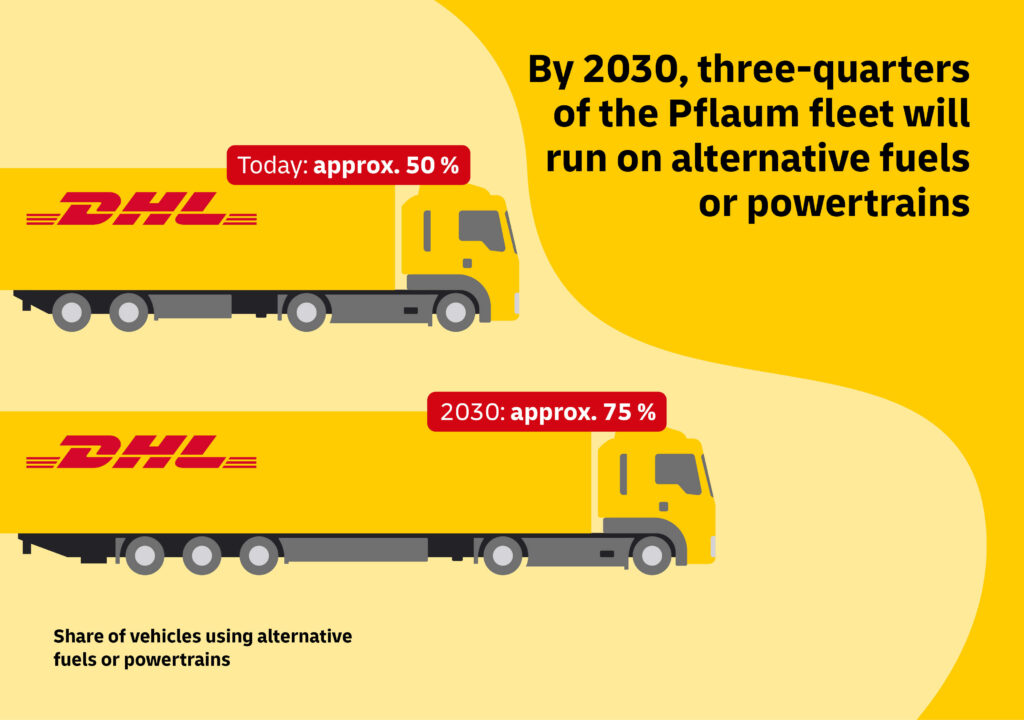
To achieve this, Pflaum is combining two approaches within a single fleet: vehicles purchased directly by the company and electric trucks under an as-a-service model. DHL and JUNA consider this combination to be a blueprint for other transport partners in the DHL network. This enables each transport company to select the approach that best aligns with its operations.
The initial experience of using our electric trucks in daily operations has been very positive. They are reliable and have been very well received by our drivers. This confirms that we are on the right track and should continue in this vein.
Matthias Schellenberger
CEO Pflaum Logistics Group
What experiences have other transport companies gained?
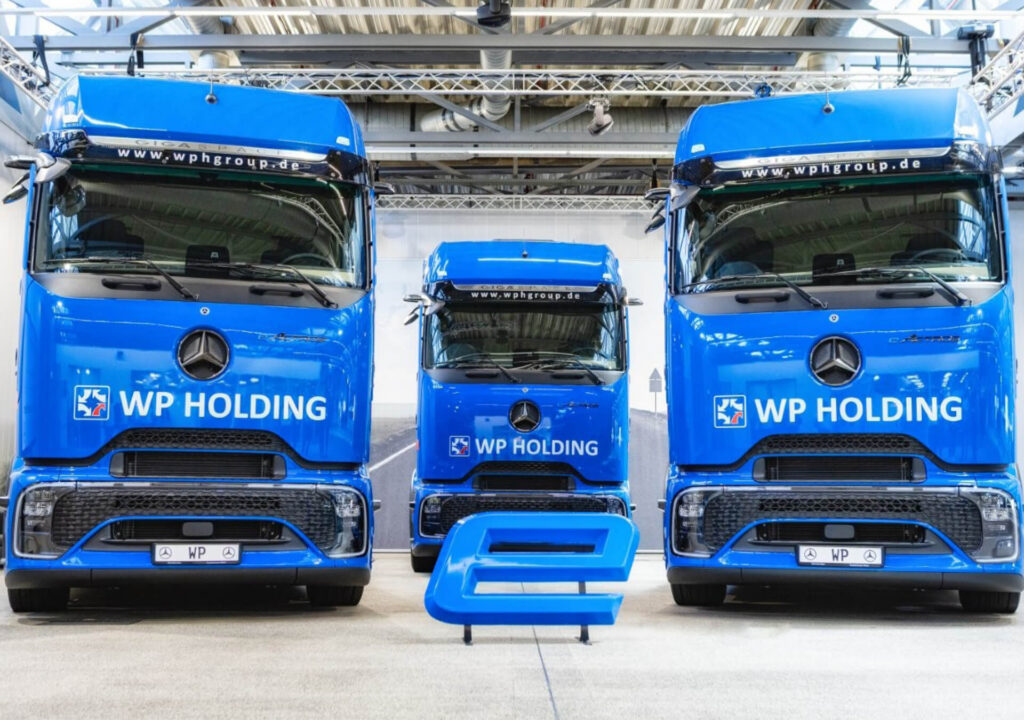
WP Holding, which is based in Zwickau, Saxony, is also investing in battery-electric trucks. The logistics service provider expects its fleet to include 20 electric trucks by the end of 2026. According to the company, these trucks will be charged with 100% green electricity at its own depot.
CEO Doreen Paesold-Runge views this as evidence of the technology’s practicality: “Our electric trucks have proven to be reliable for both local and long-haul transport, two-shift operations, and in a variety of applications.” She also emphasizes that drivers are very positive about the new vehicles’ high level of driving comfort.
For us, there is no alternative to alternative drive systems.
Doreen Paesold-Runge
CEO WP Holding GmbH
What does the example of Pflaum indicate for road freight?
The decarbonization of road freight also depends on subcontracted carriers, which handle a significant amount of shipments. The Partner Store and JUNA’s service model lower the barrier to entry for these carriers. They can operate electric trucks without investing large sums of money or bearing residual value risk.
Pflaum shows that a fleet’s own vehicles and leased electric trucks complement each other. At DHL Freight, we believe this approach can be extended to other partner companies in our network.
Are you a DHL transport partner interested in taking advantage of these terms? You can find all the necessary information in the Partner Store.