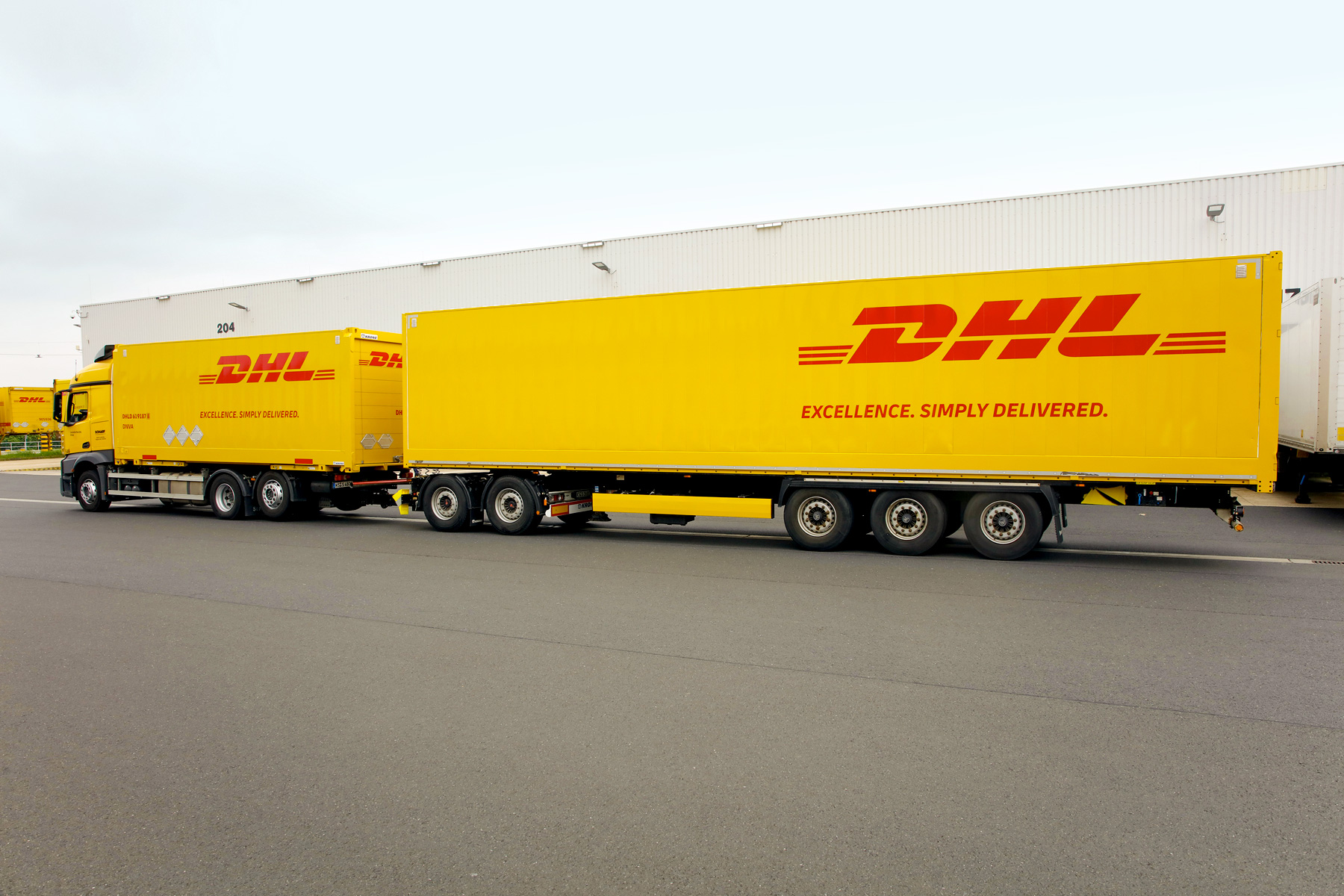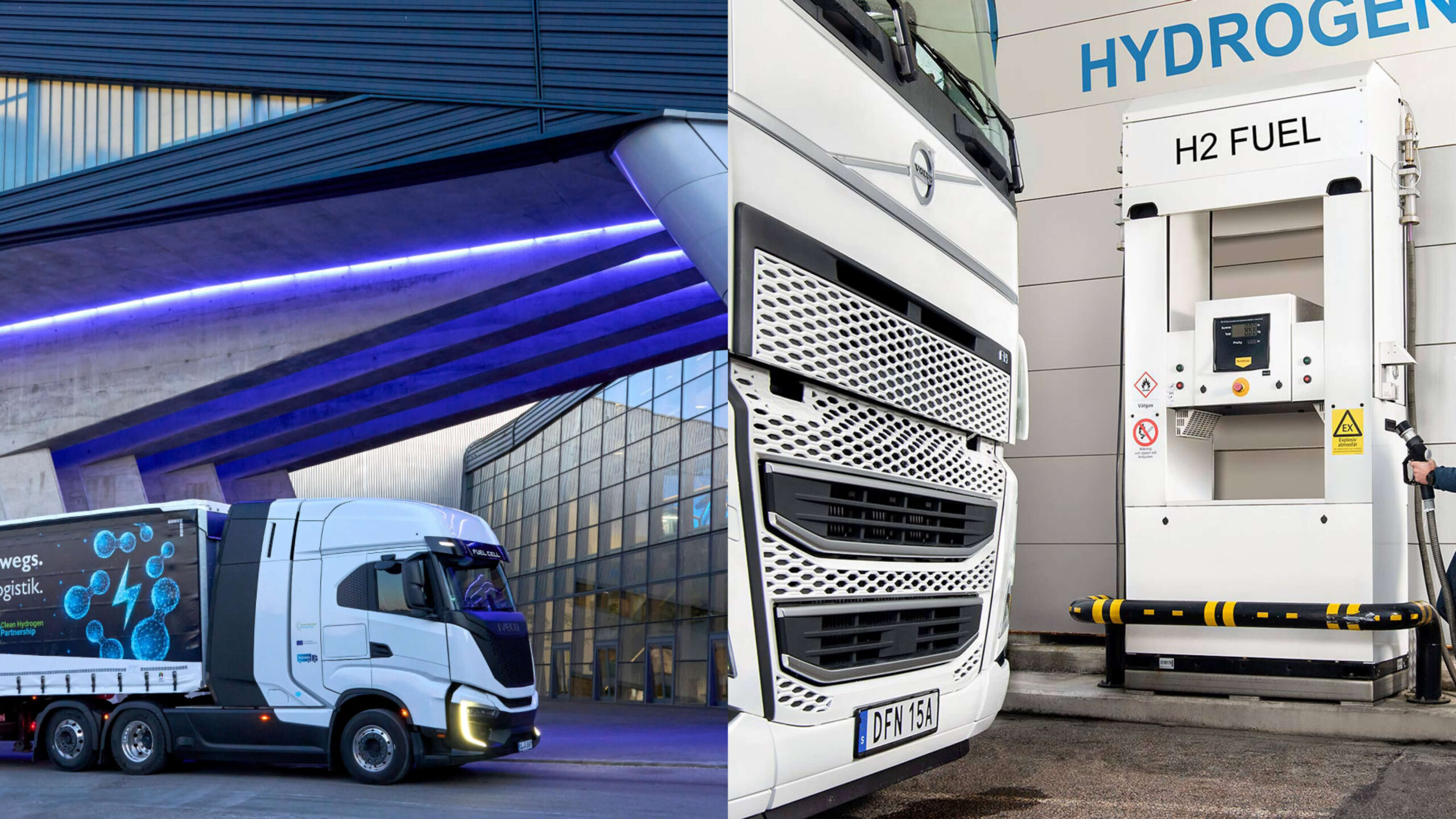
Two projects, two drive systems, one goal: through HyCET and H2Haul, DHL Freight and the BMW Group, along with other partners, test hydrogen trucks in real-world operations. This is the first time that vehicles equipped with either a fuel cell or a hydrogen-powered internal combustion engine are being deployed together. Find out how these technologies differ and what the current state of hydrogen trucks is.
Why is hydrogen making a comeback in road freight transport?
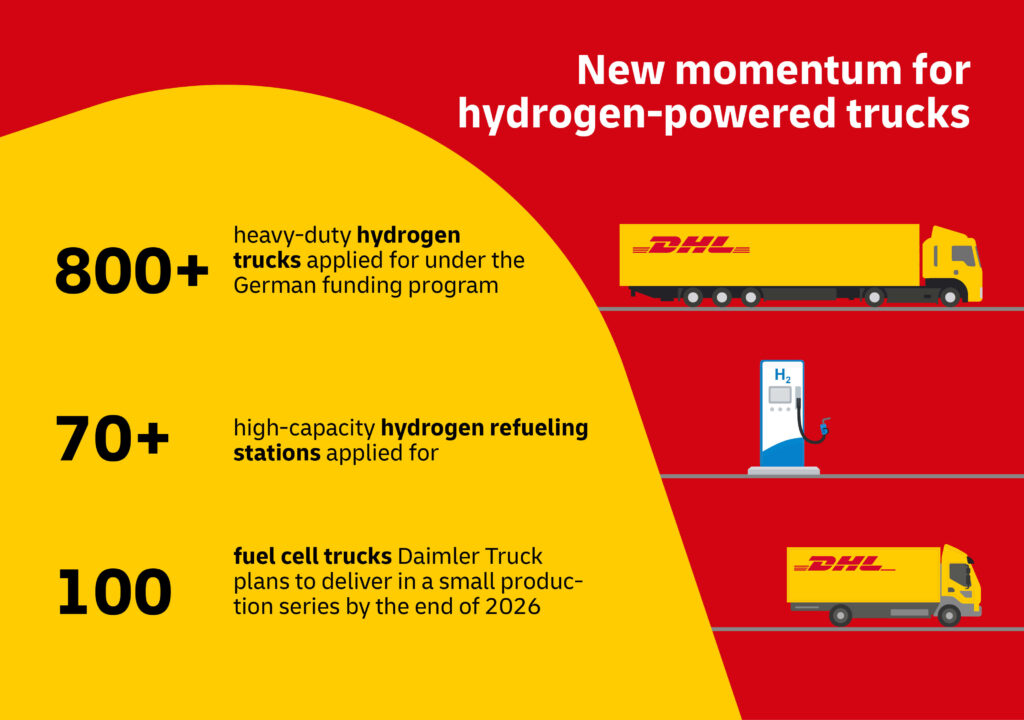
After a few quiet years, the hydrogen truck market is picking up again. At IAA Transportation in Hanover in September 2026, manufacturers and energy companies, including Daimler Truck, Volvo Group, Toyota, Bosch, Air Liquide, and TotalEnergies, presented joint plans to scale up production. The participating companies reported that they submitted applications for over 800 heavy-duty hydrogen trucks and more than 70 high-capacity refueling stations as part of a German funding program.
The vehicles themselves are getting closer to series production. Daimler Truck plans to deliver a limited production run of 100 fuel cell trucks to customers by the end of 2026. In collaboration with Keyou, Daimler Truck is additionally preparing trucks with hydrogen internal combustion engines for launch in 2027. Volvo also plans to launch a hydrogen-powered truck by 2030. This raises the question of which hydrogen propulsion system is best suited to which application.
What is new with HyCET and H2Haul?
DHL Freight is involved in both projects, serving as a logistics partner and user. Previously, the tests were conducted at different times and places, but now, both hydrogen technologies are being used simultaneously within the BMW Group’s transport logistics operations. The vehicles use the same refueling infrastructure and are operated under similar settings. This allows for a direct comparison of the technologies under real-world conditions, a scenario rarely seen before.
H2Haul: fuel-cell trucks in regular service since 2025
As part of the European H2Haul project, DHL Freight deployed two IVECO trucks equipped with Bosch fuel cell technology in 2025 and 2026. During the day, the trucks shuttled for the BMW Group between the DHL Freight terminal in Landsberg, Saxony-Anhalt, and the BMW plant in Saxony’s capital, Leipzig. At night, the trucks operated on a scheduled route to Nuremberg, Bavaria. This amounts to a daily mileage of approximately 700 kilometers.
- Range: over 700 km
- Refueling time: approximately 25 minutes
- Gas stations: Leipzig and Hormersdorf, operated by TEAL Mobility
HyCET: trucks with hydrogen combustion engines
The HyCET (Hydrogen Combustion Engine Trucks) research project, which is funded by the German Federal Ministry of Transport, employs a different approach. In this case, the hydrogen is burned directly in the engine. Volvo and Keyou developed a 13-liter hydrogen engine for use in 40-ton trucks, and Deutz developed a 7.8-liter engine for use in 18-ton trucks. The BMW Group is leading the project, and TotalEnergies is responsible for part of the infrastructure.
Fuel cell or internal combustion engine: What is the difference?
Both types of propulsion systems use hydrogen as an energy source, but they convert it into motion in entirely different ways. The fuel cell truck (fuel cell electric vehicle, or FCEV for short) generates electricity from a reaction between hydrogen and atmospheric oxygen within the system to power an electric motor. In the hydrogen internal combustion engine (H2-ICE), a spark plug ignites the hydrogen-air mixture in the cylinder. This principle is similar to that of a conventional combustion engine.
| Fuel cell (FCEV) | Hydrogen internal combustion engine (H2-ICE) | |
| Operating principle | Fuel cell generates electricity, electric motor provides propulsion | Hydrogen combusts in the cylinder, piston engine provides propulsion |
| Local emissions | Only water vapor emitted during operation | Water vapor, virtually no CO₂; nitrogen oxides reduced via exhaust aftertreatment |
| Efficiency | Higher efficiency – lower hydrogen consumption per km | Lower efficiency – higher hydrogen consumption per km |
| Requirements for hydrogen | Very high purity required | Greater tolerance for fluctuations in gas quality |
| Technology basis | New components (fuel cell stack, battery, electric motor) | Based on proven, robust diesel technology; utilizes existing production and maintenance infrastructure |
| Noise generation | Significantly quieter than a diesel truck | Comparable to a conventional combustion engine |
| Vehicles in the projects | IVECO with Bosch-fuel cell (H2Haul) | Volvo with Keyou engine, trucks with Deutz engine (HyCET) |
In short: Fuel cells are more efficient, while internal combustion engines are more durable and rely on technology that manufacturers and repair shops are familiar with. Only through practical testing can we determine which of these characteristics is more valuable in day-to-day logistics operations.
Hydrogen Truck: Perspectives and Challenges for Zero Emission Road Freight
The transportation sector is still dependent on fossil fuels and is responsible for more than 15 percent of global CO2 ...

What is the purpose of this technology comparison?
Using both drive systems simultaneously is intended to highlight their respective advantages and disadvantages under comparable conditions. DHL Freight contributes the user’s perspective and gathers firsthand experience. Among other things, the focus is on:
- Hydrogen consumption: Taking into account cargo, slopes, and varying driving profiles, how significant is the difference in efficiency during actual operation?
- Reliability: How well do the vehicles hold up under the daily strain of shift operations?
- Refueling and infrastructure: How smoothly do refueling operations and procedures run at gas stations?
- Driving experience: How do drivers rate handling, performance, and comfort?
- Economic efficiency: How do operating costs compare – and in which situations is one drive system more cost-effective than the other?
Robust results will be published in a research report in 2027, after undergoing a scientifically supervised evaluation. Initial operational experience from H2Haul has been positive. Drivers particularly appreciate the easy handling and low noise levels of the fuel cell trucks.
What is the current status of hydrogen trucks?
The optimistic mood at the IAA should not obscure the fact that hydrogen trucks are still in their infancy. In the first half of 2026, approximately 3,400 new zero-emission, heavy-duty trucks weighing over 12 tons were registered in the EU, accounting for a 2.3 percent market share. Almost all of these trucks were battery-electric vehicles. The refueling station network is sparse as well: according to H2 Mobility, only about 50 public hydrogen refueling stations were in operation in Germany at the beginning of 2026, and only a few of those are suitable for trucks.
Then there’s the cost. Hydrogen remains expensive at the pump, and manufacturers agree that hydrogen trucks must first become economically competitive with diesel trucks to gain widespread adoption. The origin of the hydrogen is also crucial for its carbon footprint. CO₂ emissions across the entire supply chain will only decrease significantly if the hydrogen is produced using renewable energy sources.
At the same time, overall conditions are improving. Germany’s toll exemption for zero-emission trucks is in effect through June 30, 2031, which provides companies with planning security. Together with vehicle subsidies and the expansion of refueling infrastructure, this creates an environment in Germany that can facilitate the ramp-up. Also, the EU supports extended toll exemption for zero-emission trucks.
What might the future hold for this technology?
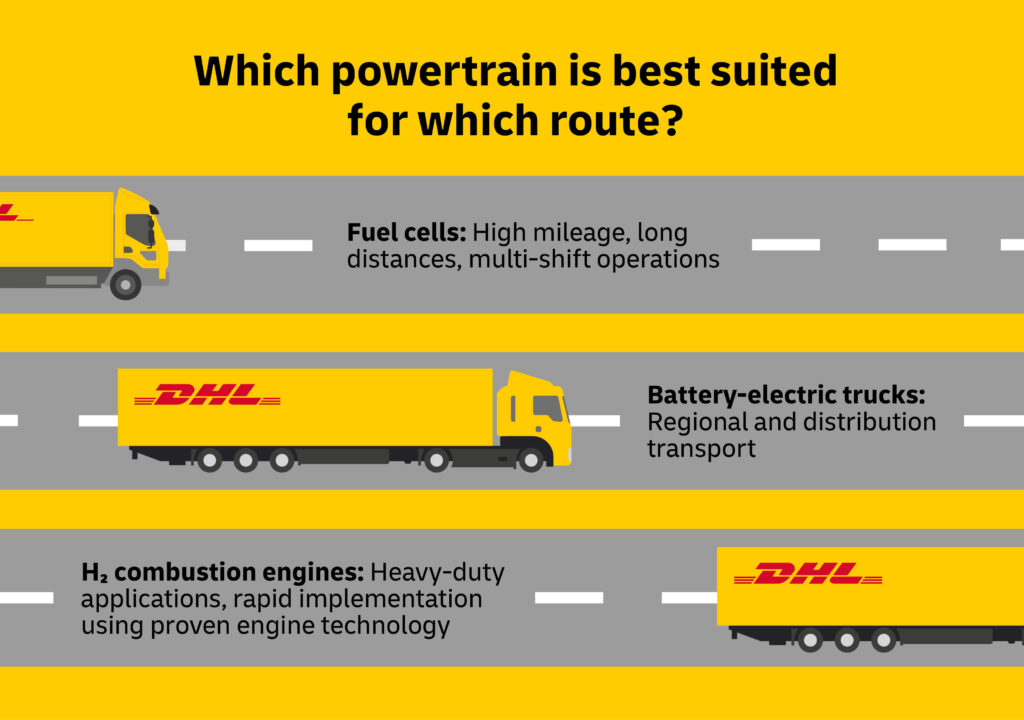
There is much to suggest that hydrogen will complement, rather than replace, battery-electric trucks. Hydrogen’s strengths lie in situations requiring long ranges, quick refueling stops, and flexible operating profiles – such as very long routes, multi-shift operations, and routes without adequate charging infrastructure. For many regional and distribution routes, electric trucks are a practical option already today.
Exclusively considering hydrogen technology, both types of propulsion systems could be viable options:
- Fuel cell: for high-mileage driving, where lower fuel consumption offers the greatest cost savings.
- Combustion engine: a solution that manufacturers can implement quickly since they can continue to use existing motor and manufacturing technology. It is ideal for applications with high load requirements.
The ultimate role of hydrogen depends on three factors: the price of hydrogen produced from renewable energy, the expansion of refueling stations along major transportation corridors, and the cost of hydrogen-powered vehicles when produced in large quantities. Field tests, such as HyCET and H2Haul, provide the necessary data for making these decisions.
What is DHL Freight doing to decarbonize road freight?
DHL Freight embraces technological neutrality when it comes to alternative propulsion systems. As part of the DHL Group, our goal is to reduce all logistics-related emissions to net zero by 2050. To achieve this goal, we are testing and utilizing various approaches in parallel – because not every technology is suitable for every route.
- Hydrogen: in addition to the HyCET and H2Haul projects, DHL Freight tested the Paul Hydrogen Power Truck in the German Rhineland region as part of a pilot program.
- Electromobility: DHL Freight is using electric trucks already on numerous routes across Europe.
- Alternative fuels: HVO fuels are reducing CO₂ emissions from the existing fleet instantly.
We will share the insights gained from the field tests. And we support our freight forwarding partners in making investment decisions regarding new propulsion technologies. Through GoGreen Plus, customers can actively support emissions reduction within the DHL Freight network, thereby reducing their own Scope 3 emissions.
Two drive systems, one lingering question: Which works best for everyday use?
The hydrogen test is entering a new phase with the parallel use of fuel cell and internal combustion engine trucks. For the first time, these two technologies can be compared under similar conditions in real-world logistics operations rather than in a testing lab.
The research report will reveal whether fuel cell efficiency or combustion engine durability will be the deciding factor. Whatever the outcome, the answer will be found on the road.