The business with microchips is booming. In Weert, the Netherlands, DHL Supply Chain stores millions of parts for machines used to manufacture these chips. From there, DHL Freight ensures a steady supply to the customer’s production sites.
Two hours from order to the production site. That’s how quickly DHL Freight delivers parts from the DHL Supply Chain (DSC) warehouse in Weert to the customer‘s site in Veldhoven, around 30 kilometers away. Other parts are no longer needed and are put back into storage. Return logistics is part of the solution.
Microchips are the hot commodity of our time. These mini-computers are everywhere – in smartphones, computers, tablets, and even vehicles. Very little works without them today. Managing the supply for producing these sought-after components is therefore a particular challenge – one that colleagues like Arjan van Weelden from DHL Freight and Anthony Kuijpers from DSC tackle every day.
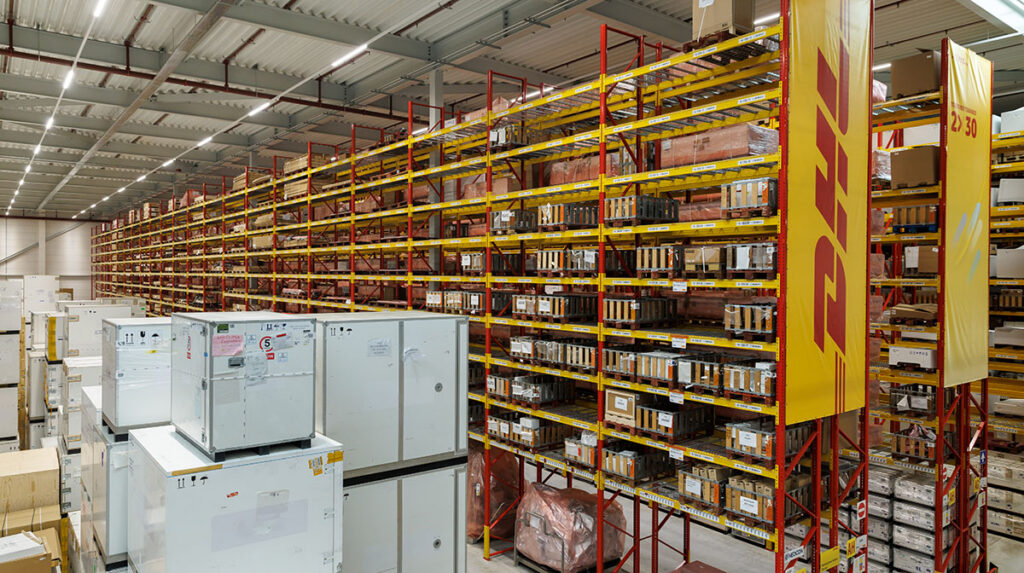
The customer, whose machines produce the semiconductors used to manufacture these microchips, stores the supply for its own production here. Its lithography machines are sold worldwide. DSC has built a dedicated warehouse in Weert for this customer and its millions of different components: tiny items stored in drawers, large machine modules kept in special crates, and components transported in double-walled containers that maintain temperature. The diversity in size, shape, and weight makes the task even more complex. In the end, everything goes onto pallets and into trucks – but there is no daily standard.
Special assignment
Since September 2025, DHL Freight has been transporting technical components between the warehouse and the customer’s production locations five days a week in two shifts. Some of these components are worth millions. As a result, the customer has special requirements for drivers – especially since the valuable cargo must be handled with extreme care. All colleagues must undergo a government security check by the Dutch intelligence service, which goes beyond a standard police clearance certificate. The application process can take up to six months and must be renewed regularly. Another special requirement: trucks are not allowed to stop en route for security reasons.
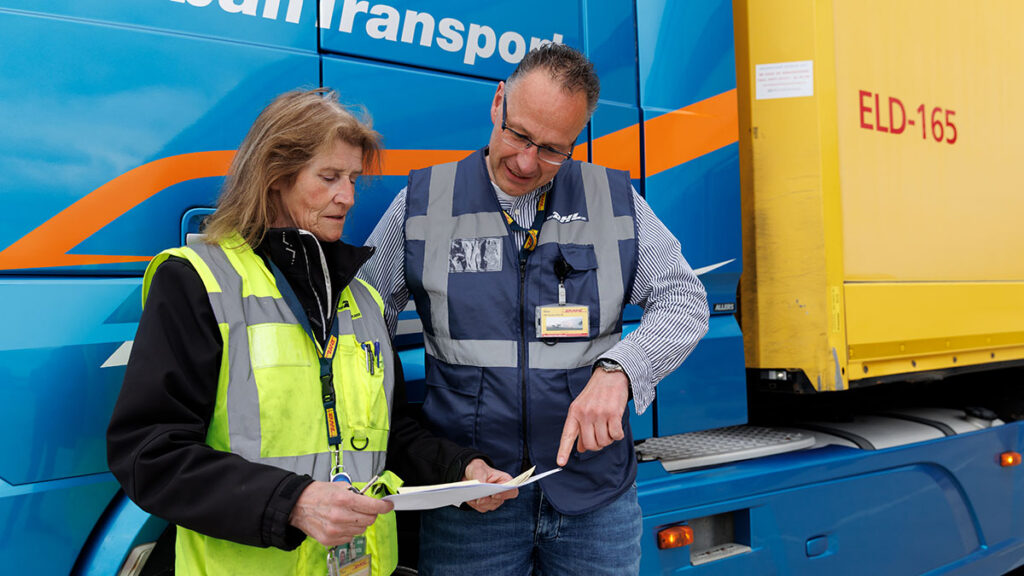
One of these trucks is driven by Jolanda Daams. She first gets an overview and loads her truck herself. Today, she is working the second shift from 3:00 p.m. to midnight and completes the same route several times. Despite the high-value cargo, she remains calm: “I carefully load my truck, drive carefully, and deliver the goods safely to the customer. That’s my job.” With a smile, she detaches her vehicle from the loading bay and shortly afterward drives off the yard, honking loudly.
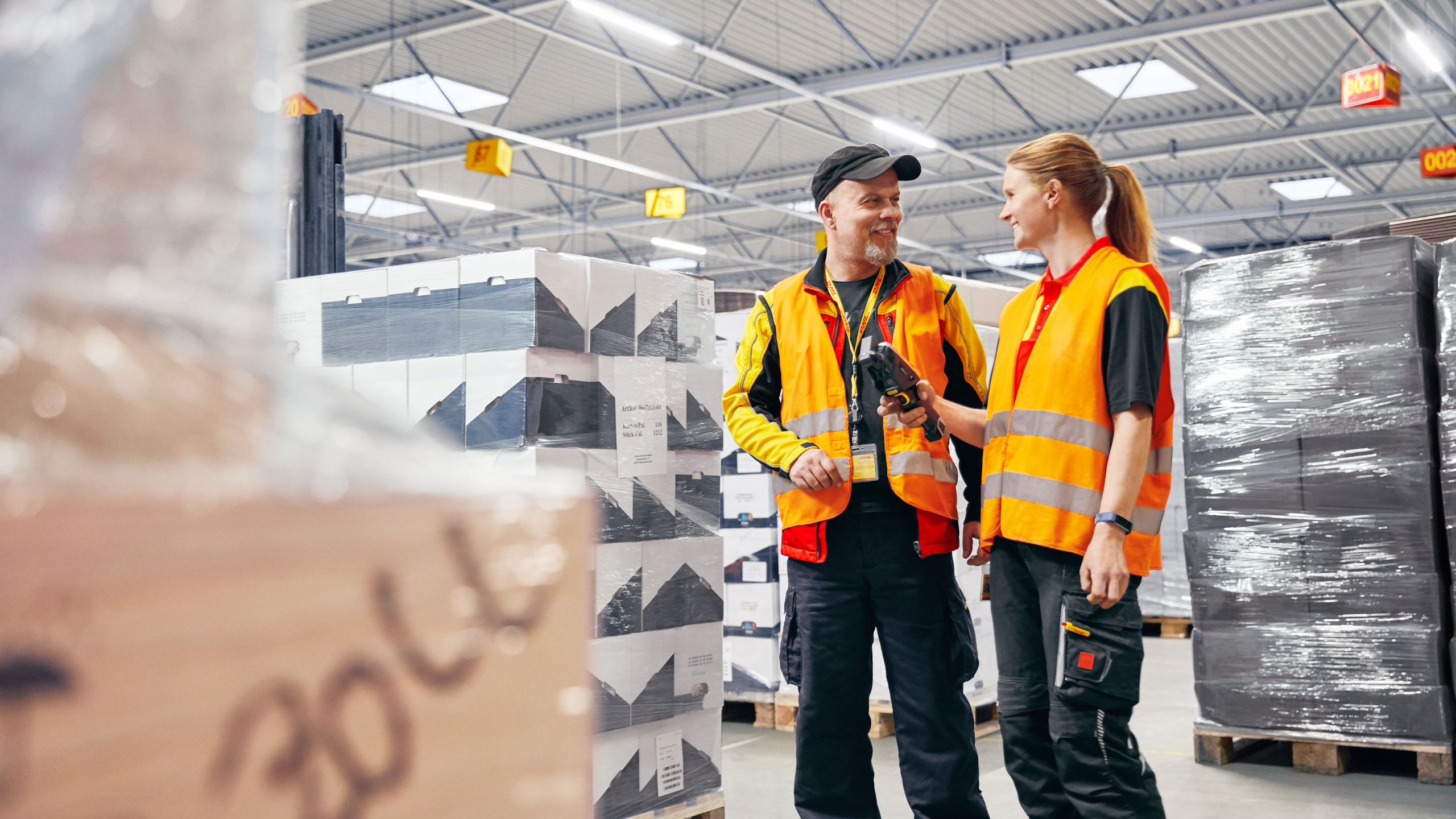
Anthony Kuijpers, shift manager at DSC, has everything firmly under control in the warehouse. Arjan van Weelden from Freight manages the logistics – in other words, the transports. The two divisions work very closely together here. “Supply Chain asked us to submit an offer, and we won the contract. We expect the number of projects we deliver within the Group to grow, and that we will increasingly become the logistics provider of choice for our colleagues,” explains van Weelden.
Across divisions
Collaboration with other business units is so important for DHL Freight that it is anchored in its strategic direction. This is where significant business opportunities lie – taking on logistics orders or additional services for sister divisions. Rik van den Broeck, Director South East, DSC Benelux, emphasizes: “With Freight as carrier on this important lane with the factory locations we are able to show the benefit of DHL as a whole. We really appreciate this partnership for our joint customer.“
The warehouse in Weert is particularly busy on Thursdays and Fridays, when new spare parts and components from the tech customer’s suppliers arrive. Mornings are generally hectic as well, when outgoing shipments are processed.
Today everything is running smoothly, and Anthony does not have to pick up the phone too often. But: “There are days when I look at my phone for the first time at six in the morning and for the last time at midnight,” he explains. The customer plans on a daily basis, so it is not possible to predict exactly which products will be required. Only the approximate volume is known. Laughing, he adds: “If I lost my phone, it would be like losing a hand.”
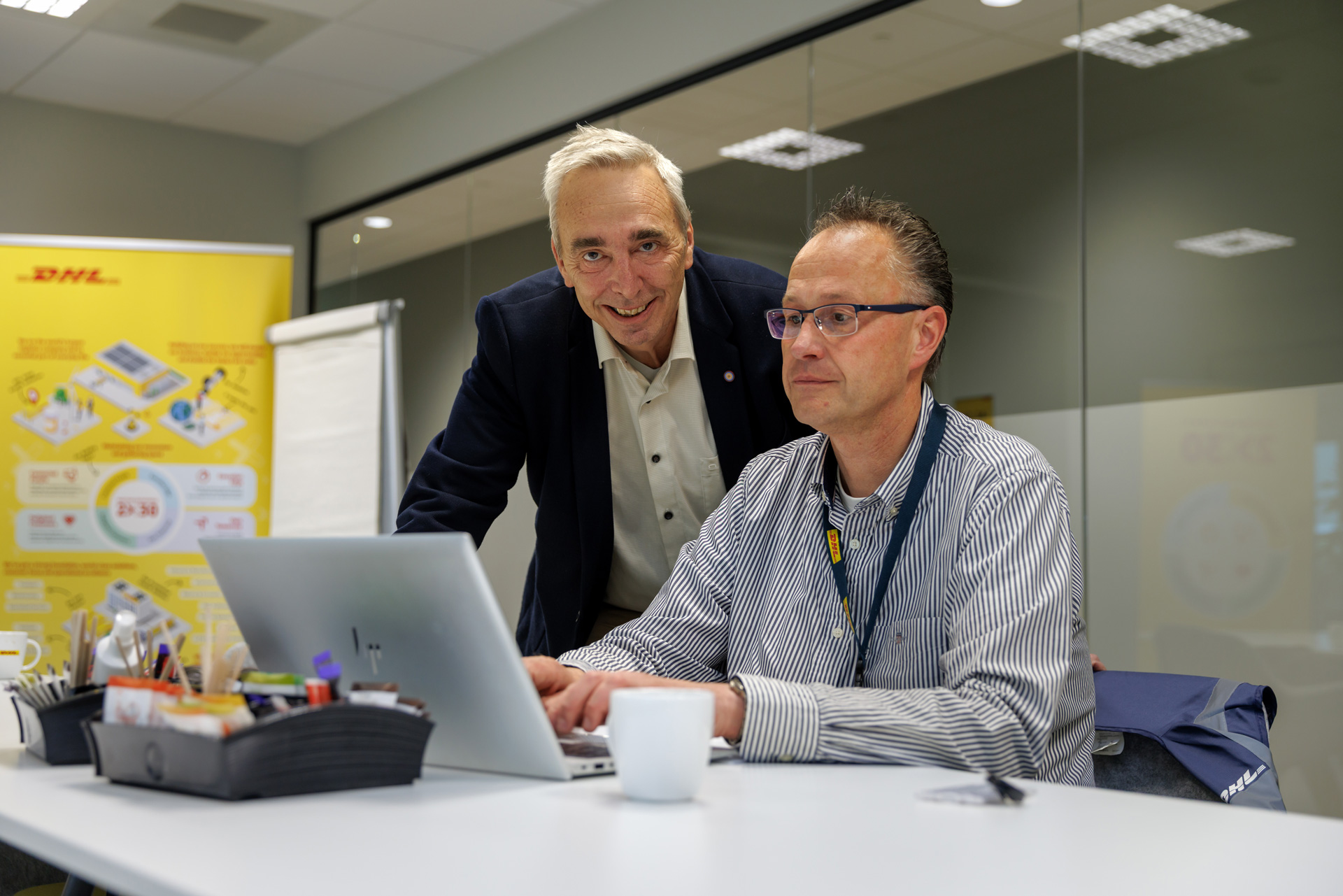
The shift manager spends time on the warehouse locations in Weert, Eindhoven, and also at the customer’s production site. “I speak with drivers, operational colleagues, and office staff,” he says – acting as the link that keeps everything together. A shared planning tool with the customer is expected to make scheduling trucks, routes, and drivers easier in the future.
Future business
DHL Freight intends to significantly expand its activities in the technology sector. Alongside Life Sciences & Healthcare and Defense, this sector is a top priority. The division aims to benefit from the boom. In the tech sector, this includes not only mobile phones and computers, but also logistics for data centers, which continue to expand as the use of AI grows and ever-larger volumes of data are stored in the cloud. In the coming years, Freight aims to grow by around 7.4 percent annually in this area. DHL is seeking to secure a share of this global market – in the United States alone, ten new data center logistics sites are currently being established, with further locations planned in Asia.
A look inside the warehouse in Weert shows just how diverse and flexible logistics in this industrial sector can be. If growth continues at this pace, Arjan, Anthony, and their colleagues will play a key role – and will have plenty of work ahead.
Large data centers are emerging everywhere. We want to benefit from that, and the project in Weert is a major step in that direction.
Perry Banken
Key Account Manager for the customer, DHL Freight
Tech warehouse in Weert
- More than 120.000 square meters warehouse
- 8,000 square meters temperature-controlled area (temperature and humidity)
- Clean rooms for dust-free packaging
- High-bay warehouse
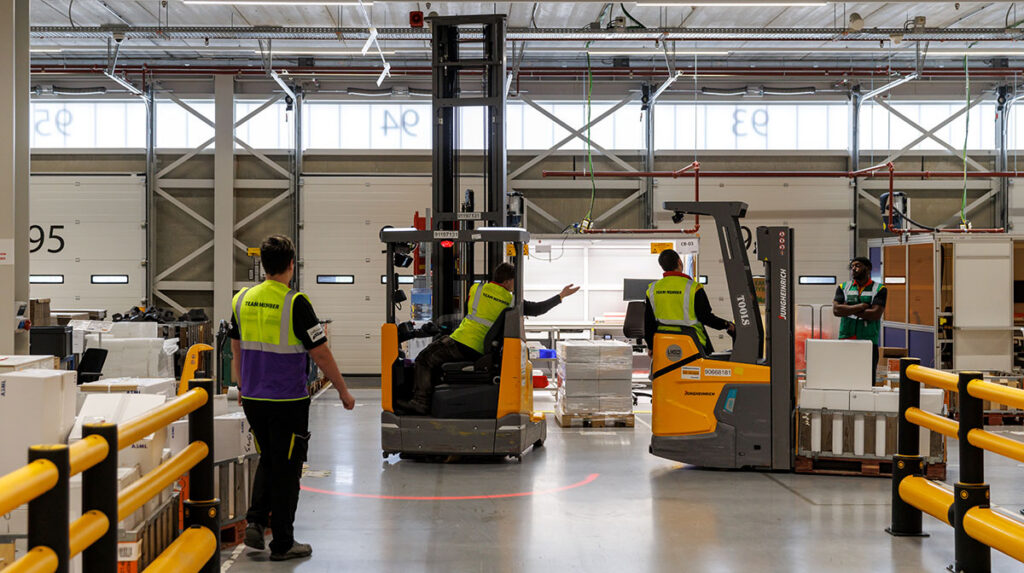
- 99 loading gates
- 16 million high-tech parts are stored
- Charging infrastructure for electric vehicles
For this project, we evaluated several logistics providers. DHL Freight was one of the preferred suppliers, offering a dedicated and cost-efficient solution.
Maurice van Zeeland
Carrier Specialist, DHL Supply Chain
How a microchip is made*
* Simplified illustration
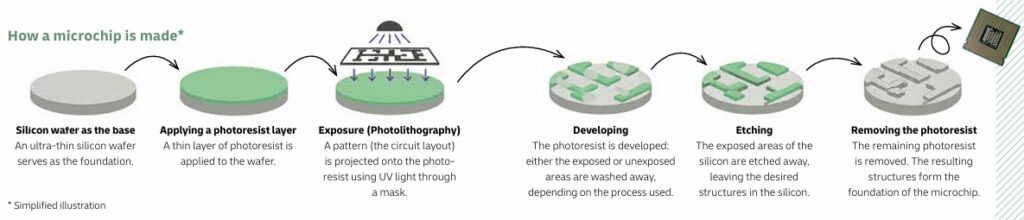
Silicon wafer as the base
An ultra-thin silicon wafer serves as the foundation.
Applying a photoresist layer
A thin layer of photoresist is applied to the wafer.
Exposure (Photolithography)
A pattern (the circuit layout) is projected onto the photoresist using UV light through a mask.
Developing
The photoresist is developed: either the exposed or unexposed areas are washed away, depending on the process used.
Etching
The exposed areas of the silicon are etched away, leaving the desired structures in the silicon.
Removing the photoresist
The remaining photoresist is removed. The resulting structures form the foundation of the microchip.
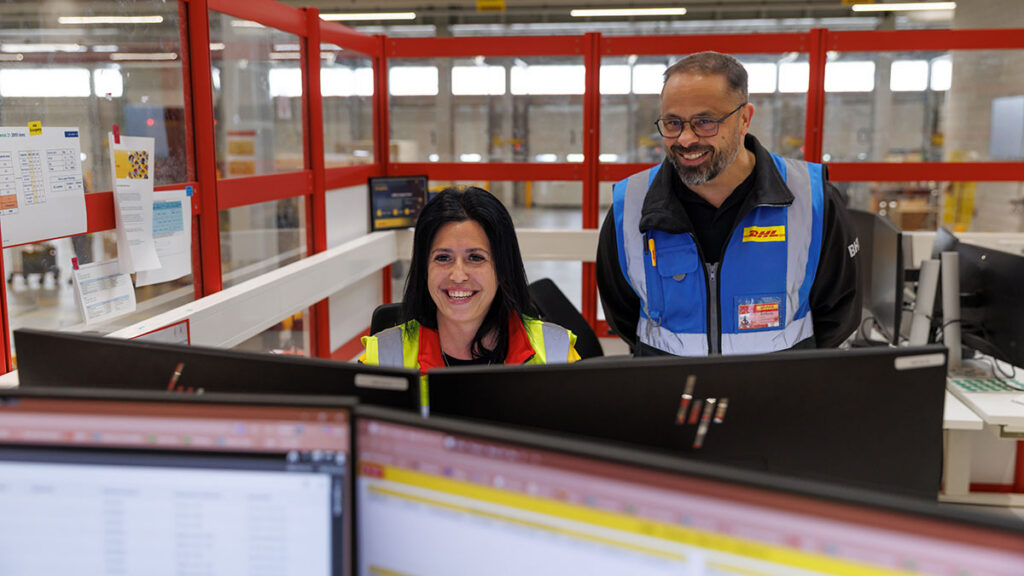
Katarzyna Piatek keeps a close eye on all orders and maintains regular contact with Anthony Kuijpers.
Jolanda Daams completes several runs each day between the warehouse and the customer’s production site. Arjan van Weelden takes the opportunity to speak with her on site.
The parts and components for the machines come in a wide range of sizes — from very small to very large.
Anthony’s most important work tool is his phone. He is in charge of the shift and ensures everything runs smoothly. If issues arise, he picks up the phone and resolves them.
This shipment includes a large machine component in a custom transport crate, as well as smaller parts — these size differences make the logistics particularly demanding.