Range Extender in Pilot Operation: DHL Freight and BMW Group Conduct Joint Testing
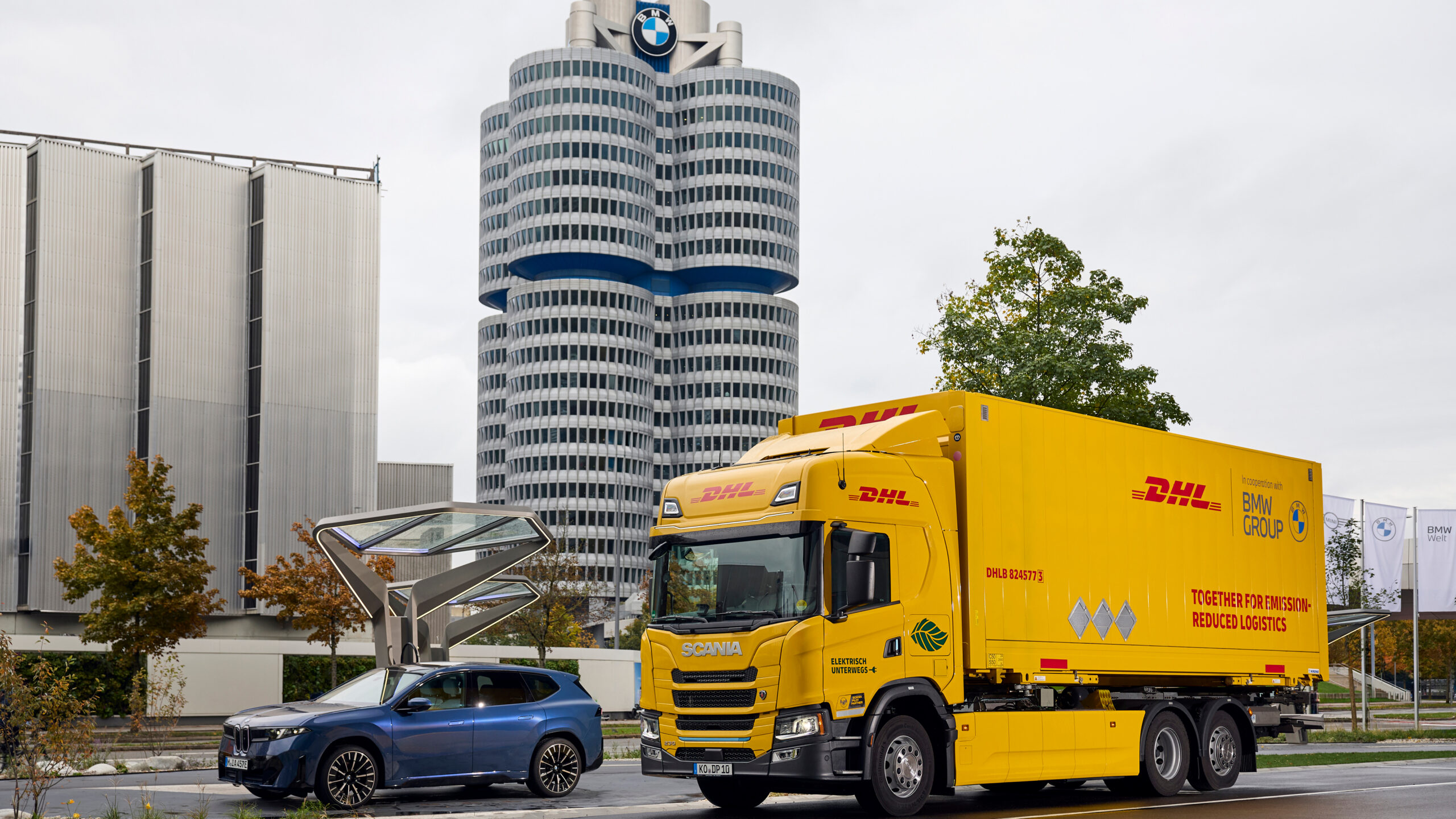
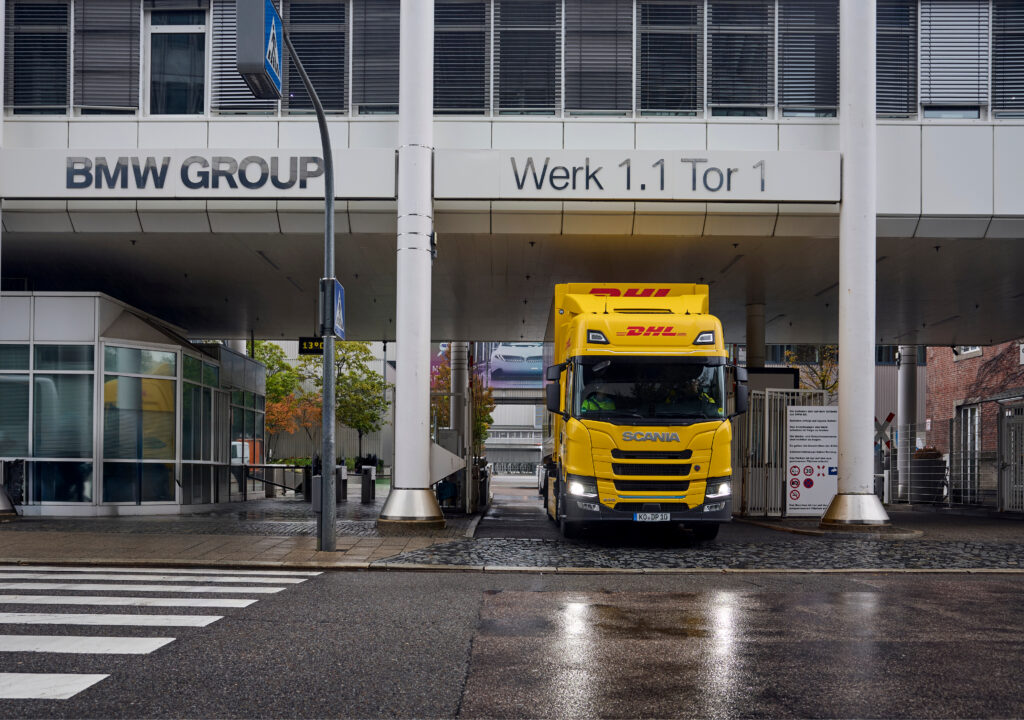
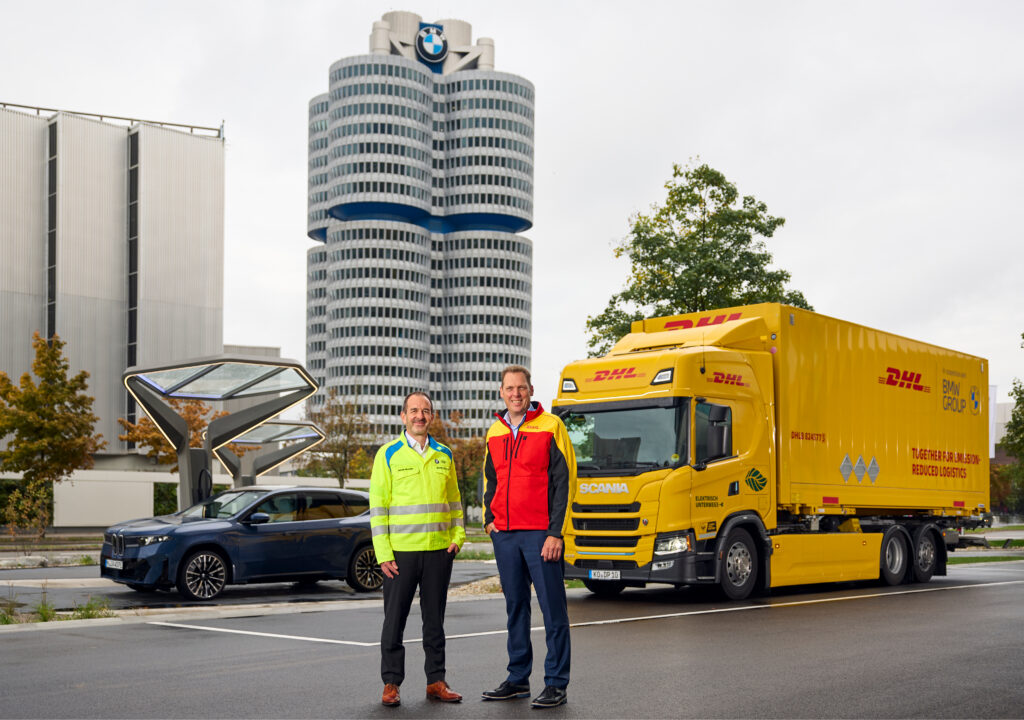
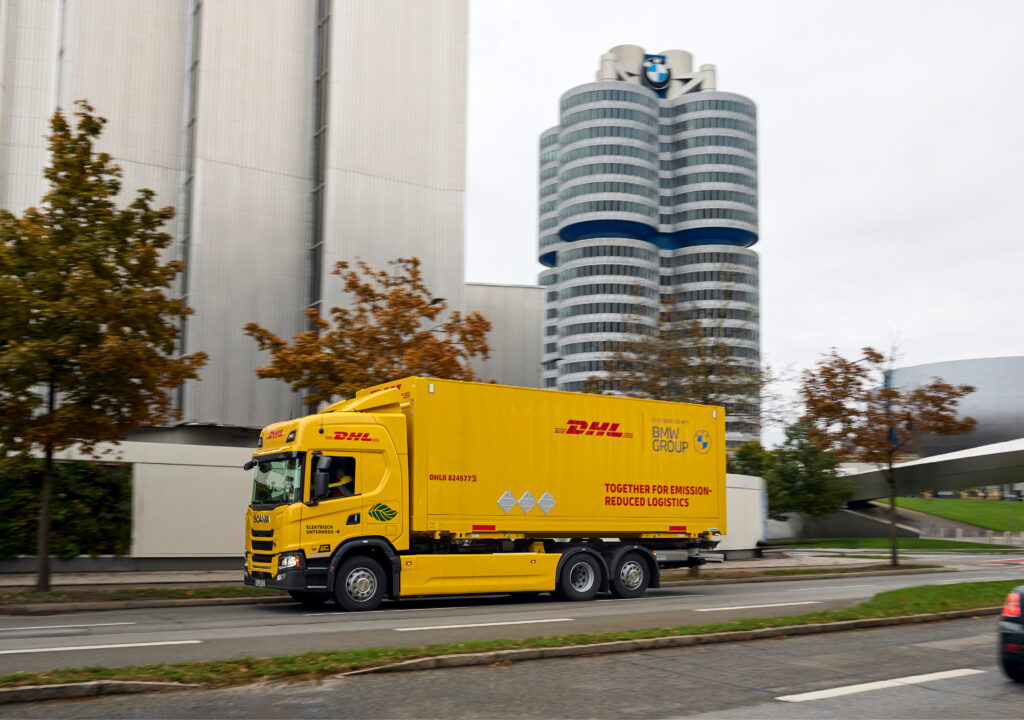
Together with BMW Group, DHL Freight has been testing an electric truck with range extender technology in real-world conditions for several weeks. The truck has been used on a long-distance route between Berlin and Munich, as well as on short-distance daily routes around Munich.
This patented vehicle concept combines a fully electric propulsion system with a compact generator. The generator provides additional electrical power when charging infrastructure is unavailable or when the route is longer than planned.
The pilot project proves: Electric vehicles can account for 80 to over 90 percent of travel on regular routes – even in winter conditions.
What Is this Pilot Project About?
For the first time in the German automotive industry, DHL Freight and the BMW Group have deployed a range extender in logistics operations. The vehicle was used over the course of several weeks on two key transport routes typical for supplying BMW Group plants.
The long-distance route was approximately 600 kilometers from a DHL parcel center near Berlin to Unterschleissheim, north of Munich. The truck traveled most of this distance on pure electric power and only used the range extender for a few sections. Additionally, the vehicle was used for daily trips around the Munich plant, covering distances ranging from a few kilometers to 380 kilometers.
The pilot project thus covers two very different areas of application: scheduled long-distance service on the one hand, and small-scale distribution with high frequency on the other. Both are firmly established in the day-to-day operations of automotive logistics – and both present different challenges for battery-electric long-distance transport.
What Are the Technical Specifications of the Range Extender Drive?
The truck being tested has a maximum gross vehicle weight of 40 tons. Its electric motor delivers 230 kW of continuous output (with a peak of 295 kW), and the battery has a capacity of 416 kWh. A 120-kW generator is installed instead of an additional battery module to provide extra electrical power when needed without interrupting electric driving.
What is crucial for operational use: the internal combustion engine is not mechanically connected to the powertrain. The vehicle retains the characteristics of a fully electric commercial vehicle. The generator serves as a backup, not the main drive.
Depending on the application, the total range is between 650 and 800 kilometers. In practice, the truck achieved a pure electric share of 80 to over 90 percent, even in low temperatures and in areas with limited charging infrastructure.
Feature
Figure
Gross vehicle weight
40 tons
Electric motor
230 kW continuous output (295 kW peak)
Battery
416 kWh
Generator
120 kW
Total range
650 to 800 km
Share of electric propulsion in practical test
80 to over 90%
Why Does DHL Freight Believe in the Range Extender Concept?
The key issue in long-distance battery-electric trucking is not maximum range, but reliability in everyday use. This is precisely where the range extender comes in.
The range extender enables us to operate battery-electric vehicles reliably over long distances. What matters is not maximum range, but resilience in real-world operation: We can still drive electrically when charging infrastructure is temporarily unavailable, schedules are tight, or winter conditions prevail. This allows us to operate 80 to 90 percent electrically on recurring routes, which accelerates the adoption of electric mobility in long-distance transport.
Markus Voss, CEO DHL Freight
In practical terms, this means that routes can be completed with electric power even when charging stations are at full capacity, when there are last-minute scheduling changes, or when the length of a leg exceeds initial plans. This reduces dependence on public fast-charging infrastructure and overcomes one of the biggest obstacles to incorporating electric trucks into existing long-distance transportation networks.
How Does the Project Fit into the BMW Group’s Strategy?
For BMW Group, the pilot project is an integral part of its strategy for reduced emissions. A cross-sectoral team evaluates alternative propulsion technologies for all modes of global transport, considering technological maturity, economic feasibility, and infrastructure development.
With our BMW Group strategy for reduced emissions, we are seeking effective ways and measures to reduce emissions in logistics. It is particularly important to remain open-minded when it comes to drive technology, as the key priority is to reduce CO₂ emissions from vehicle operations as quickly as possible. To achieve this, the use case and the drive technology must be a good fit.
Michael Nikolaides, Senior Vice President Production Network, Supply Chain Management at BMW Group
Pilot projects like this one allow for the early testing of new technologies under real-world conditions and their subsequent integration into existing logistics processes based on data, rather than waiting for perfect infrastructure.
How Does DHL Freight Evaluate the Pilot Project?
For DHL Freight, the range extender is not a commitment to a single technology. Rather, it is another building block in a technology-neutral approach. DHL Freight is simultaneously evaluating battery-electric and hydrogen trucks, as well as vehicles powered by HVO and bio-LNG/CNG. Accordingly, over 1,500 vehicles powered by low-emission fuels or electric drives are already in operation.
This is where the range extender concept proves useful. It enables electric vehicles to be used in situations where they were previously impractical, such as on long-distance routes and day trips with unpredictable charging times.
The electric power share measured during the pilot operation ranged from 80 to over 90 percent. This shows that battery-electric propulsion can be used for long-distance transport today, provided the vehicle design accounts for operational realities. It does not depend on a nationwide charging infrastructure.
Range Extenders as a Bridge Technology for Lower-Emission Long-Distance Transport
The pilot project with BMW Group is about more than just testing technology. It addresses a key operational question in the industry: How can the share of electric power in long-distance transport be maximized without compromising schedules, supply reliability, or economic efficiency? The answer lies in concepts that decouple electric propulsion from the availability of charging infrastructure without sacrificing low-emission performance.
[We] at BMW Group are thrilled to be working with strong partners – such as DHL in this case – on innovative pilot projects to find the right solutions.
Michael Nikolaides, Senior Vice President Production Network, Supply Chain Management at BMW Group
For DHL Freight, this is another step toward achieving its long-term goal of net-zero logistics-related emissions by 2050. For customers like BMW Group, this means reducing greenhouse gas emissions in road freight does not require waiting for the next phase of infrastructure development. It is already possible within existing transport processes.
Photos: Fabian Kirchbauer
Patrick Möller
Content Creation
Patrick Möller is an author for DHL Freight Connections. As a teenager, he worked as a writer covering trading card games and eSports events for various media outlets. During his training as a marketing communications specialist, he discovered his passion for advertising – and for logistics. Since then, he has combined both with his love for writing. And yes, he still plays trading card games.
Shall we explore this topic in more depth?
Curious? Our authors will be happy to help you. Just send us a short message—and we'll dive deeper together.